
- Home
- SEODiscover the latest updates from across the United States, including politics, culture, economy, and trending stories. Stay informed on the key events shaping the nation and the topics everyone’s talking about.
- Technical SEOLearn technical SEO concepts including crawling, indexing, XML sitemaps, robots.txt, canonical tags, site architecture, and website performance.
- Local SEOOptimize your business for local seo with Google Business Profile, local citations, reviews, maps, and location-based SEO.
- Mobile SEOImprove your website’s mobile seo performance with responsive design, mobile-first indexing, usability, and page speed optimization.
- On-Page SEOExplore on-page seo optimization techniques such as title tags, meta descriptions, headings, URLs, internal linking, and content optimization.
- Off-Page SEODiscover off-page SEO strategies such as backlinks, digital PR, brand mentions, outreach, and authority building.
- SEO ToolsExplore the best SEO tools for keyword research, technical audits, backlink analysis, rank tracking, and website optimization.
- Core Web VitalsLearn how to improve Core Web Vitals including LCP, INP, CLS, page speed, and overall user experience for better rankings.
- Keyword ResearchLearn how to find profitable keywords, analyze search intent, evaluate competition, and build effective keyword strategies.
- Link BuildingMaster ethical link building techniques, backlink analysis, outreach methods, guest posting, and authority growth strategies.
- Google Search ConsoleLearn how to use Google Search Console to monitor indexing, fix errors, analyze search performance, and improve SEO.
- SEO BasicsLearn the fundamentals of search engine optimization (SEO Basics), including how search engines work, SEO terminology, and beginner-friendly best practices.
- Paid Media
- Display AdvertisingLearn display advertising strategies, banner ads, audience targeting, remarketing, Google Display campaigns, and optimization techniques.
- Google AdsLearn Google Ads strategies, campaign setup, bidding, keywords, Performance Max, Search Ads, and optimization techniques.
- LinkedIn AdsLearn LinkedIn Ads strategies for B2B marketing, lead generation, audience targeting, campaign optimization, and paid social advertising.
- Meta AdsLearn Meta Ads strategies for Facebook and Instagram, including campaign setup, targeting, retargeting, and performance optimization.
- Paid Media AnalyticsLearn paid media analytics, including CPC, CTR, CPA, ROAS, conversion tracking, attribution, reporting, and campaign performance analysis.
- PPC StrategyLearn effective PPC strategies, campaign planning, bidding, keyword targeting, landing pages, conversion optimization, and more.
- ContentTransform your living spaces with inspiration, tips, and trends in interior design. From minimalist decor to bold statements, find ideas for every style and budget.
- Social
- Digital MarketingExplore stories and advice on living your best life. From personal growth to entertainment, dive into the latest in lifestyle trends and inspiration.
- Artificial IntelligenceStay informed about health and wellness with expert advice, fitness tips, and the latest medical breakthroughs. Your guide to a healthier and happier life.
- DevelopmentYou will find development related educational articles
- GTMLearn Google Tag Manager (GTM) with practical guides for tags, triggers, variables, tracking, conversions, and website analytics implementation.
- HTMLLearn HTML with simple tutorials, examples, tags, elements, attributes, and best practices for building modern web pages.
- HTML CSSLearn HTML CSS together with practical tutorials, examples, layouts, styling techniques, responsive design, and modern web development practices.
- HTML JSLearn HTML JS – JavaScript with practical tutorials and examples for adding interactivity, dynamic content, events, and functionality to web pages.
- JavaScriptExplore JavaScript tutorials, examples, concepts, and practical techniques for creating interactive and dynamic websites and web applications.
- PHPLearn PHP programming with practical tutorials, examples, functions, syntax, and web development techniques for beginners and developers.
- PythonLearn Python programming with practical tutorials, examples, syntax, functions, automation techniques, and useful programming concepts.
- Home
- SEODiscover the latest updates from across the United States, including politics, culture, economy, and trending stories. Stay informed on the key events shaping the nation and the topics everyone’s talking about.
- Technical SEOLearn technical SEO concepts including crawling, indexing, XML sitemaps, robots.txt, canonical tags, site architecture, and website performance.
- Local SEOOptimize your business for local seo with Google Business Profile, local citations, reviews, maps, and location-based SEO.
- Mobile SEOImprove your website’s mobile seo performance with responsive design, mobile-first indexing, usability, and page speed optimization.
- On-Page SEOExplore on-page seo optimization techniques such as title tags, meta descriptions, headings, URLs, internal linking, and content optimization.
- Off-Page SEODiscover off-page SEO strategies such as backlinks, digital PR, brand mentions, outreach, and authority building.
- SEO ToolsExplore the best SEO tools for keyword research, technical audits, backlink analysis, rank tracking, and website optimization.
- Core Web VitalsLearn how to improve Core Web Vitals including LCP, INP, CLS, page speed, and overall user experience for better rankings.
- Keyword ResearchLearn how to find profitable keywords, analyze search intent, evaluate competition, and build effective keyword strategies.
- Link BuildingMaster ethical link building techniques, backlink analysis, outreach methods, guest posting, and authority growth strategies.
- Google Search ConsoleLearn how to use Google Search Console to monitor indexing, fix errors, analyze search performance, and improve SEO.
- SEO BasicsLearn the fundamentals of search engine optimization (SEO Basics), including how search engines work, SEO terminology, and beginner-friendly best practices.
- Paid Media
- Display AdvertisingLearn display advertising strategies, banner ads, audience targeting, remarketing, Google Display campaigns, and optimization techniques.
- Google AdsLearn Google Ads strategies, campaign setup, bidding, keywords, Performance Max, Search Ads, and optimization techniques.
- LinkedIn AdsLearn LinkedIn Ads strategies for B2B marketing, lead generation, audience targeting, campaign optimization, and paid social advertising.
- Meta AdsLearn Meta Ads strategies for Facebook and Instagram, including campaign setup, targeting, retargeting, and performance optimization.
- Paid Media AnalyticsLearn paid media analytics, including CPC, CTR, CPA, ROAS, conversion tracking, attribution, reporting, and campaign performance analysis.
- PPC StrategyLearn effective PPC strategies, campaign planning, bidding, keyword targeting, landing pages, conversion optimization, and more.
- ContentTransform your living spaces with inspiration, tips, and trends in interior design. From minimalist decor to bold statements, find ideas for every style and budget.
- Social
- Digital MarketingExplore stories and advice on living your best life. From personal growth to entertainment, dive into the latest in lifestyle trends and inspiration.
- Artificial IntelligenceStay informed about health and wellness with expert advice, fitness tips, and the latest medical breakthroughs. Your guide to a healthier and happier life.
- DevelopmentYou will find development related educational articles
- GTMLearn Google Tag Manager (GTM) with practical guides for tags, triggers, variables, tracking, conversions, and website analytics implementation.
- HTMLLearn HTML with simple tutorials, examples, tags, elements, attributes, and best practices for building modern web pages.
- HTML CSSLearn HTML CSS together with practical tutorials, examples, layouts, styling techniques, responsive design, and modern web development practices.
- HTML JSLearn HTML JS – JavaScript with practical tutorials and examples for adding interactivity, dynamic content, events, and functionality to web pages.
- JavaScriptExplore JavaScript tutorials, examples, concepts, and practical techniques for creating interactive and dynamic websites and web applications.
- PHPLearn PHP programming with practical tutorials, examples, functions, syntax, and web development techniques for beginners and developers.
- PythonLearn Python programming with practical tutorials, examples, syntax, functions, automation techniques, and useful programming concepts.
Now Reading: How AI Agents Are Transforming Digital Marketing in 2026
-
01
How AI Agents Are Transforming Digital Marketing in 2026
- Home//
- SEO//Discover the latest updates from across the United States, including politics, culture, economy, and trending stories. Stay informed on the key events shaping the nation and the topics everyone’s talking about.
- Technical SEO//Learn technical SEO concepts including crawling, indexing, XML sitemaps, robots.txt, canonical tags, site architecture, and website performance.
- Local SEO//Optimize your business for local seo with Google Business Profile, local citations, reviews, maps, and location-based SEO.
- Mobile SEO//Improve your website’s mobile seo performance with responsive design, mobile-first indexing, usability, and page speed optimization.
- On-Page SEO//Explore on-page seo optimization techniques such as title tags, meta descriptions, headings, URLs, internal linking, and content optimization.
- Off-Page SEO//Discover off-page SEO strategies such as backlinks, digital PR, brand mentions, outreach, and authority building.
- SEO Tools//Explore the best SEO tools for keyword research, technical audits, backlink analysis, rank tracking, and website optimization.
- Core Web Vitals//Learn how to improve Core Web Vitals including LCP, INP, CLS, page speed, and overall user experience for better rankings.
- Keyword Research//Learn how to find profitable keywords, analyze search intent, evaluate competition, and build effective keyword strategies.
- Link Building//Master ethical link building techniques, backlink analysis, outreach methods, guest posting, and authority growth strategies.
- Google Search Console//Learn how to use Google Search Console to monitor indexing, fix errors, analyze search performance, and improve SEO.
- SEO Basics//Learn the fundamentals of search engine optimization (SEO Basics), including how search engines work, SEO terminology, and beginner-friendly best practices.
- Paid Media//
- Display Advertising//Learn display advertising strategies, banner ads, audience targeting, remarketing, Google Display campaigns, and optimization techniques.
- Google Ads//Learn Google Ads strategies, campaign setup, bidding, keywords, Performance Max, Search Ads, and optimization techniques.
- LinkedIn Ads//Learn LinkedIn Ads strategies for B2B marketing, lead generation, audience targeting, campaign optimization, and paid social advertising.
- Meta Ads//Learn Meta Ads strategies for Facebook and Instagram, including campaign setup, targeting, retargeting, and performance optimization.
- Paid Media Analytics//Learn paid media analytics, including CPC, CTR, CPA, ROAS, conversion tracking, attribution, reporting, and campaign performance analysis.
- PPC Strategy//Learn effective PPC strategies, campaign planning, bidding, keyword targeting, landing pages, conversion optimization, and more.
- Content//Transform your living spaces with inspiration, tips, and trends in interior design. From minimalist decor to bold statements, find ideas for every style and budget.
- Social//
- Digital Marketing//Explore stories and advice on living your best life. From personal growth to entertainment, dive into the latest in lifestyle trends and inspiration.
- Artificial Intelligence//Stay informed about health and wellness with expert advice, fitness tips, and the latest medical breakthroughs. Your guide to a healthier and happier life.
- Development//You will find development related educational articles
- GTM//Learn Google Tag Manager (GTM) with practical guides for tags, triggers, variables, tracking, conversions, and website analytics implementation.
- HTML//Learn HTML with simple tutorials, examples, tags, elements, attributes, and best practices for building modern web pages.
- HTML CSS//Learn HTML CSS together with practical tutorials, examples, layouts, styling techniques, responsive design, and modern web development practices.
- HTML JS//Learn HTML JS – JavaScript with practical tutorials and examples for adding interactivity, dynamic content, events, and functionality to web pages.
- JavaScript//Explore JavaScript tutorials, examples, concepts, and practical techniques for creating interactive and dynamic websites and web applications.
- PHP//Learn PHP programming with practical tutorials, examples, functions, syntax, and web development techniques for beginners and developers.
- Python//Learn Python programming with practical tutorials, examples, syntax, functions, automation techniques, and useful programming concepts.
- Home
- Artificial Intelligence
- How AI Agents Are Transforming Digital Marketing in 2026
How AI Agents Are Transforming Digital Marketing in 2026

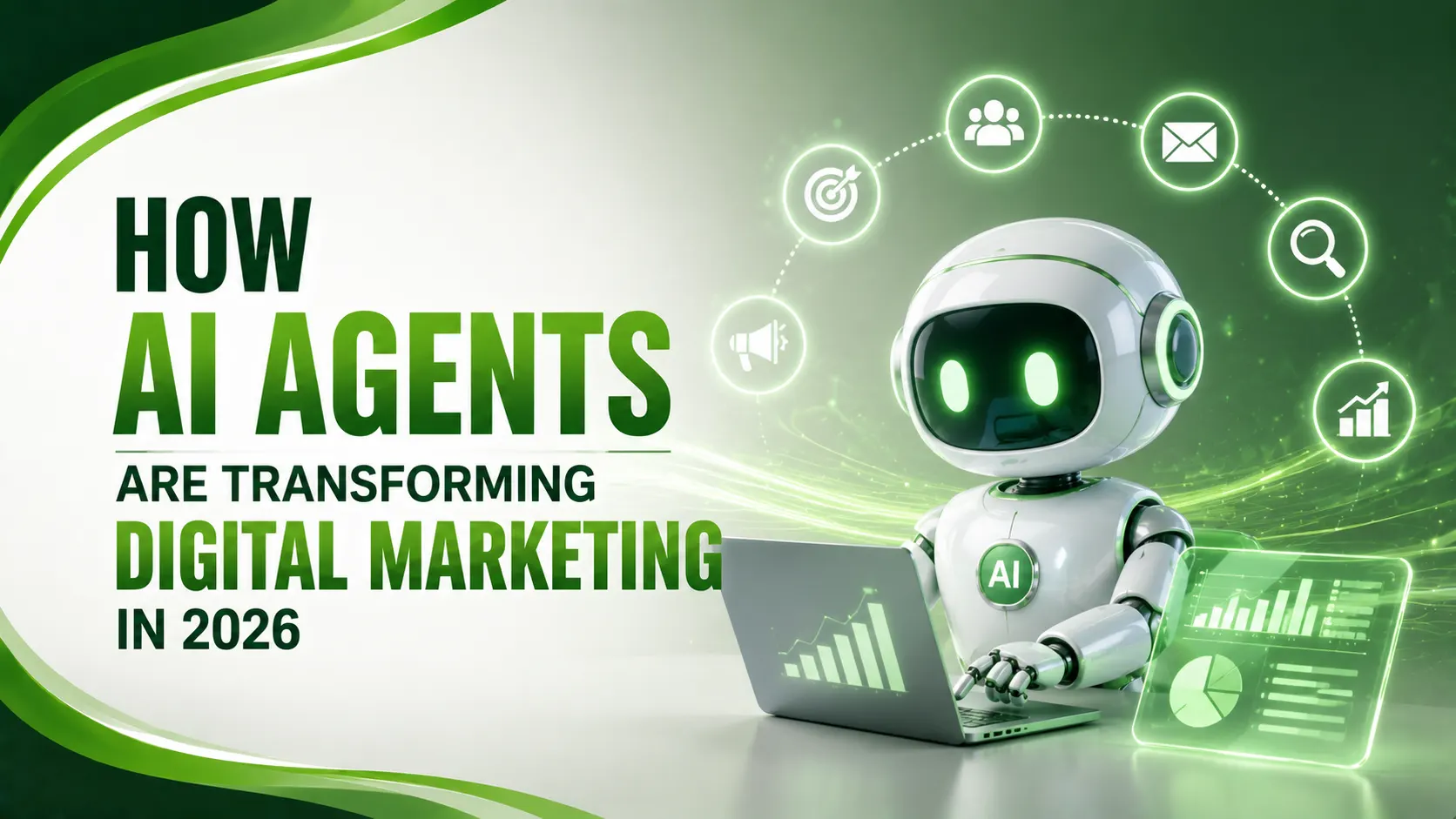
AI agents are transforming digital marketing by pursuing goals instead of waiting for prompts. Here's what's actually deployed, and the honest adoption gap.
Table of Contents
ToggleAI agents are transforming digital marketing by moving from tools that respond to prompts into systems that pursue goals on their own. Tell a traditional AI tool to write five ad headlines, and it writes five headlines. Give an AI agent a goal like "improve return on ad spend," and it analyzes campaign data, adjusts budgets within approved limits, tests creative variations, and monitors results over time.
This isn't a distant trend. McKinsey's April 2026 research suggests agentic AI is poised to power as much as two-thirds of current marketing activities, and 90.3% of marketing organizations already use AI agents somewhere in their stack.
The shift goes further than internal workflows too. Consumers are starting to delegate research and buying decisions to their own AI agents, which changes who marketing actually needs to persuade.
01How AI Agents Differ From Marketing Automation
Workshop Digital's guide draws the distinction precisely: task-driven AI waits for direction, while agentic AI works toward outcomes. Traditional automation follows fixed if-this-then-that rules. Agentic AI receives a goal, determines the best path, takes action, observes results, and improves.
Talkwalker's guide adds the mechanism behind that flexibility: agents have agency, the ability to act on their own without constant human direction. Rather than commands, agentic AI relies on goals, you tell the system what you want to achieve, and it figures out how to get there.
02Where AI Agents Are Already Working
The JADA Squad's guide clusters the most transformative real use cases into five areas: campaign management, personalization at scale, content operations, performance optimization, and customer journey orchestration, often coordinated by a strategic orchestrator agent overseeing specialized ones.
Vellum's July 2026 guide grounds this in concrete deployed examples: a Conversation Intelligence Agent that turns sales call data into marketing signals, a Landing Page QA Agent automating checks on links and UTMs, and a Competitor Monitor tracking pricing and ad launches, none of them content generation, all of them operational glue work marketing teams previously did by hand.
McKinsey's case study of a consumer brand's agentic rollout found something concrete: introducing agents in three waves, ideation, then pretesting with compliance checks, then global localization, increased the speed of end-to-end content creation four times versus the traditional manual workflow.
03The Bigger Shift: Marketing to Agents, Not Just People
MarTech's guide captures the reframe bluntly: while people still drive demand, it's increasingly AI that executes the transaction. Shoppers use AI assistants to check stock, confirm delivery times, or verify returns, and brands respond with their own AI agents reading order data and acting instantly.
Commercetools' guide extends this into a genuine forecast: Forrester predicts 1 in 5 sellers will need to respond to AI-powered buyer agents with dynamically delivered counteroffers via their own seller-controlled agents, a shift from persuading humans to negotiating with software acting on their behalf.
04The Protocol Making Agent Coordination Possible
Averi's guide traces the infrastructure story: Anthropic released the Model Context Protocol in November 2024 as an open standard connecting AI systems to external tools and data. By March 2026, MCP reached 97 million monthly SDK downloads with over 5,800 community-built servers.
Talkwalker's guide, referenced above, explains why this matters practically: through MCP integration, marketing systems connect to your CMS, analytics, CRM, and content library through one standardized protocol instead of brittle custom integrations, letting multiple specialized agents collaborate and produce more robust, verified insights together.
05The Adoption Gap: Hype vs Where Teams Actually Are
MarTech's guide, referenced above, offers a needed reality check: according to McKinsey, 62% of organizations remain in the experimental phase with agentic AI, and only 23% are actually scaling it beyond pilots.
DIMA's guide adds a measured, real outcome from agencies already scaling: Forbes Agency Council's January 2026 analysis found marketing agencies adopting them saw client satisfaction scores increase by an average of 28%, driven mainly by faster response times and more personalized campaign strategies.
06What This Means for Content and Visibility Strategy
Rellify's guide connects agentic AI directly to a shift our own coverage has tracked closely: from backlinks to citations, AI agents increasingly value well-sourced, factually accurate information, being cited as an authoritative source is becoming as valuable as a traditional backlink.
This lines up exactly with what our AI search ranking factors guide found, authority, extractability, and cross-source consensus increasingly decide visibility, whether the "reader" is a human or an agent acting on one's behalf.
07Traditional Automation vs Agentic AI
A quick comparison of how the two approaches genuinely differ.
| Factor | Traditional Automation | Agentic AI |
|---|---|---|
| Trigger | Fixed if-this-then-that rules | A defined goal or outcome |
| Flexibility | Breaks when one step fails | Adapts and reasons through obstacles |
| Scope | Single, linear task | Multi-step, cross-tool coordination |
| Improvement | Static until manually updated | Learns from outcomes over time |
| Best fit | Repetitive, predictable tasks | Complex, multi-system objectives |
08Getting Started With Marketing AI Agents
A short list based on how successful early deployments actually rolled out.
Start with one high-volume, well-defined use case, not a full agentic overhaul on day one.
Audit data quality first, poor CRM and analytics data leads agents to optimize toward the wrong outcomes entirely.
Set clear guardrails around brand and compliance, human review still matters for tone and legal accuracy.
Watch for over-automation risk, agents optimizing narrow metrics like opens can quietly harm trust without strategic oversight.
Ensure your content is agent-readable, the same extractability and authority signals that win AI citations apply here too.
09How Ready Is Your Team for AI Agents?
Answer a few quick questions to check your current readiness.
How Ready Is Your Team?
Select the option that matches your situation
10Common Questions
No. Every source on this covers agentic AI as expanding what marketers can do, not replacing strategic thinking, brand judgment, or creative direction, which still require human oversight.
Automation follows fixed rules and breaks when a step fails. AI agents pursue a goal, adapt when obstacles appear, and improve their approach based on outcomes over time.
90.3% report using AI agents somewhere in their stack, per 2026 research, though most organizations remain in an experimental phase rather than fully scaled deployment.
The Model Context Protocol is an open standard letting AI agents connect to tools like your CMS, CRM, and analytics through one integration instead of many custom ones, enabling multi-agent collaboration.
Audit your data quality, pick one well-defined, high-volume use case, and set clear brand and compliance guardrails before scaling to broader workflows.
Related Articles
What We Learn Today
Agents pursue goals; automation just follows fixed rules
Real deployments include competitor monitoring and QA agents
Consumers increasingly delegate research and buying to AI agents
MCP standardizes how agents connect to marketing tools
Most teams are still experimenting, not fully scaled yet
Citations are becoming as valuable to agents as backlinks once were
Build a Complete AI-Ready Marketing Strategy
AI agents increasingly rely on the same visibility signals covered in our ranking factors and optimization guides. Explore both next.
Related Posts

Previous Post
Next Post
Previous Post
Next Post


- Artificial Intelligence
- Content
- Core Web Vitals
- Development
- Digital Marketing
- Display Advertising
- Google Ads
- Google Search Console
- GTM
- HTML
- HTML CSS
- JavaScript
- Keyword Research
- Link Building
- LinkedIn Ads
- Local SEO
- Meta Ads
- Mobile SEO
- Off-Page SEO
- On-Page SEO
- Paid Media
- Paid Media Analytics
- PHP
- PPC Strategy
- Python
- SEO
- SEO Basics
- SEO Tools
- Social
- Technical SEO