
- Home
- SEODiscover the latest updates from across the United States, including politics, culture, economy, and trending stories. Stay informed on the key events shaping the nation and the topics everyone’s talking about.
- Technical SEOLearn technical SEO concepts including crawling, indexing, XML sitemaps, robots.txt, canonical tags, site architecture, and website performance.
- Local SEOOptimize your business for local seo with Google Business Profile, local citations, reviews, maps, and location-based SEO.
- Mobile SEOImprove your website’s mobile seo performance with responsive design, mobile-first indexing, usability, and page speed optimization.
- On-Page SEOExplore on-page seo optimization techniques such as title tags, meta descriptions, headings, URLs, internal linking, and content optimization.
- Off-Page SEODiscover off-page SEO strategies such as backlinks, digital PR, brand mentions, outreach, and authority building.
- SEO ToolsExplore the best SEO tools for keyword research, technical audits, backlink analysis, rank tracking, and website optimization.
- Core Web VitalsLearn how to improve Core Web Vitals including LCP, INP, CLS, page speed, and overall user experience for better rankings.
- Keyword ResearchLearn how to find profitable keywords, analyze search intent, evaluate competition, and build effective keyword strategies.
- Link BuildingMaster ethical link building techniques, backlink analysis, outreach methods, guest posting, and authority growth strategies.
- Google Search ConsoleLearn how to use Google Search Console to monitor indexing, fix errors, analyze search performance, and improve SEO.
- SEO BasicsLearn the fundamentals of search engine optimization (SEO Basics), including how search engines work, SEO terminology, and beginner-friendly best practices.
- Paid Media
- Display AdvertisingLearn display advertising strategies, banner ads, audience targeting, remarketing, Google Display campaigns, and optimization techniques.
- Google AdsLearn Google Ads strategies, campaign setup, bidding, keywords, Performance Max, Search Ads, and optimization techniques.
- LinkedIn AdsLearn LinkedIn Ads strategies for B2B marketing, lead generation, audience targeting, campaign optimization, and paid social advertising.
- Meta AdsLearn Meta Ads strategies for Facebook and Instagram, including campaign setup, targeting, retargeting, and performance optimization.
- Paid Media AnalyticsLearn paid media analytics, including CPC, CTR, CPA, ROAS, conversion tracking, attribution, reporting, and campaign performance analysis.
- PPC StrategyLearn effective PPC strategies, campaign planning, bidding, keyword targeting, landing pages, conversion optimization, and more.
- ContentTransform your living spaces with inspiration, tips, and trends in interior design. From minimalist decor to bold statements, find ideas for every style and budget.
- Social
- Digital MarketingExplore stories and advice on living your best life. From personal growth to entertainment, dive into the latest in lifestyle trends and inspiration.
- Artificial IntelligenceStay informed about health and wellness with expert advice, fitness tips, and the latest medical breakthroughs. Your guide to a healthier and happier life.
- DevelopmentYou will find development related educational articles
- GTMLearn Google Tag Manager (GTM) with practical guides for tags, triggers, variables, tracking, conversions, and website analytics implementation.
- HTMLLearn HTML with simple tutorials, examples, tags, elements, attributes, and best practices for building modern web pages.
- HTML CSSLearn HTML CSS together with practical tutorials, examples, layouts, styling techniques, responsive design, and modern web development practices.
- HTML JSLearn HTML JS – JavaScript with practical tutorials and examples for adding interactivity, dynamic content, events, and functionality to web pages.
- JavaScriptExplore JavaScript tutorials, examples, concepts, and practical techniques for creating interactive and dynamic websites and web applications.
- PHPLearn PHP programming with practical tutorials, examples, functions, syntax, and web development techniques for beginners and developers.
- PythonLearn Python programming with practical tutorials, examples, syntax, functions, automation techniques, and useful programming concepts.
- Home
- SEODiscover the latest updates from across the United States, including politics, culture, economy, and trending stories. Stay informed on the key events shaping the nation and the topics everyone’s talking about.
- Technical SEOLearn technical SEO concepts including crawling, indexing, XML sitemaps, robots.txt, canonical tags, site architecture, and website performance.
- Local SEOOptimize your business for local seo with Google Business Profile, local citations, reviews, maps, and location-based SEO.
- Mobile SEOImprove your website’s mobile seo performance with responsive design, mobile-first indexing, usability, and page speed optimization.
- On-Page SEOExplore on-page seo optimization techniques such as title tags, meta descriptions, headings, URLs, internal linking, and content optimization.
- Off-Page SEODiscover off-page SEO strategies such as backlinks, digital PR, brand mentions, outreach, and authority building.
- SEO ToolsExplore the best SEO tools for keyword research, technical audits, backlink analysis, rank tracking, and website optimization.
- Core Web VitalsLearn how to improve Core Web Vitals including LCP, INP, CLS, page speed, and overall user experience for better rankings.
- Keyword ResearchLearn how to find profitable keywords, analyze search intent, evaluate competition, and build effective keyword strategies.
- Link BuildingMaster ethical link building techniques, backlink analysis, outreach methods, guest posting, and authority growth strategies.
- Google Search ConsoleLearn how to use Google Search Console to monitor indexing, fix errors, analyze search performance, and improve SEO.
- SEO BasicsLearn the fundamentals of search engine optimization (SEO Basics), including how search engines work, SEO terminology, and beginner-friendly best practices.
- Paid Media
- Display AdvertisingLearn display advertising strategies, banner ads, audience targeting, remarketing, Google Display campaigns, and optimization techniques.
- Google AdsLearn Google Ads strategies, campaign setup, bidding, keywords, Performance Max, Search Ads, and optimization techniques.
- LinkedIn AdsLearn LinkedIn Ads strategies for B2B marketing, lead generation, audience targeting, campaign optimization, and paid social advertising.
- Meta AdsLearn Meta Ads strategies for Facebook and Instagram, including campaign setup, targeting, retargeting, and performance optimization.
- Paid Media AnalyticsLearn paid media analytics, including CPC, CTR, CPA, ROAS, conversion tracking, attribution, reporting, and campaign performance analysis.
- PPC StrategyLearn effective PPC strategies, campaign planning, bidding, keyword targeting, landing pages, conversion optimization, and more.
- ContentTransform your living spaces with inspiration, tips, and trends in interior design. From minimalist decor to bold statements, find ideas for every style and budget.
- Social
- Digital MarketingExplore stories and advice on living your best life. From personal growth to entertainment, dive into the latest in lifestyle trends and inspiration.
- Artificial IntelligenceStay informed about health and wellness with expert advice, fitness tips, and the latest medical breakthroughs. Your guide to a healthier and happier life.
- DevelopmentYou will find development related educational articles
- GTMLearn Google Tag Manager (GTM) with practical guides for tags, triggers, variables, tracking, conversions, and website analytics implementation.
- HTMLLearn HTML with simple tutorials, examples, tags, elements, attributes, and best practices for building modern web pages.
- HTML CSSLearn HTML CSS together with practical tutorials, examples, layouts, styling techniques, responsive design, and modern web development practices.
- HTML JSLearn HTML JS – JavaScript with practical tutorials and examples for adding interactivity, dynamic content, events, and functionality to web pages.
- JavaScriptExplore JavaScript tutorials, examples, concepts, and practical techniques for creating interactive and dynamic websites and web applications.
- PHPLearn PHP programming with practical tutorials, examples, functions, syntax, and web development techniques for beginners and developers.
- PythonLearn Python programming with practical tutorials, examples, syntax, functions, automation techniques, and useful programming concepts.
Now Reading: AMP vs Modern Web Performance: Is AMP Still Relevant in 2026?
-
01
AMP vs Modern Web Performance: Is AMP Still Relevant in 2026?
- Home//
- SEO//Discover the latest updates from across the United States, including politics, culture, economy, and trending stories. Stay informed on the key events shaping the nation and the topics everyone’s talking about.
- Technical SEO//Learn technical SEO concepts including crawling, indexing, XML sitemaps, robots.txt, canonical tags, site architecture, and website performance.
- Local SEO//Optimize your business for local seo with Google Business Profile, local citations, reviews, maps, and location-based SEO.
- Mobile SEO//Improve your website’s mobile seo performance with responsive design, mobile-first indexing, usability, and page speed optimization.
- On-Page SEO//Explore on-page seo optimization techniques such as title tags, meta descriptions, headings, URLs, internal linking, and content optimization.
- Off-Page SEO//Discover off-page SEO strategies such as backlinks, digital PR, brand mentions, outreach, and authority building.
- SEO Tools//Explore the best SEO tools for keyword research, technical audits, backlink analysis, rank tracking, and website optimization.
- Core Web Vitals//Learn how to improve Core Web Vitals including LCP, INP, CLS, page speed, and overall user experience for better rankings.
- Keyword Research//Learn how to find profitable keywords, analyze search intent, evaluate competition, and build effective keyword strategies.
- Link Building//Master ethical link building techniques, backlink analysis, outreach methods, guest posting, and authority growth strategies.
- Google Search Console//Learn how to use Google Search Console to monitor indexing, fix errors, analyze search performance, and improve SEO.
- SEO Basics//Learn the fundamentals of search engine optimization (SEO Basics), including how search engines work, SEO terminology, and beginner-friendly best practices.
- Paid Media//
- Display Advertising//Learn display advertising strategies, banner ads, audience targeting, remarketing, Google Display campaigns, and optimization techniques.
- Google Ads//Learn Google Ads strategies, campaign setup, bidding, keywords, Performance Max, Search Ads, and optimization techniques.
- LinkedIn Ads//Learn LinkedIn Ads strategies for B2B marketing, lead generation, audience targeting, campaign optimization, and paid social advertising.
- Meta Ads//Learn Meta Ads strategies for Facebook and Instagram, including campaign setup, targeting, retargeting, and performance optimization.
- Paid Media Analytics//Learn paid media analytics, including CPC, CTR, CPA, ROAS, conversion tracking, attribution, reporting, and campaign performance analysis.
- PPC Strategy//Learn effective PPC strategies, campaign planning, bidding, keyword targeting, landing pages, conversion optimization, and more.
- Content//Transform your living spaces with inspiration, tips, and trends in interior design. From minimalist decor to bold statements, find ideas for every style and budget.
- Social//
- Digital Marketing//Explore stories and advice on living your best life. From personal growth to entertainment, dive into the latest in lifestyle trends and inspiration.
- Artificial Intelligence//Stay informed about health and wellness with expert advice, fitness tips, and the latest medical breakthroughs. Your guide to a healthier and happier life.
- Development//You will find development related educational articles
- GTM//Learn Google Tag Manager (GTM) with practical guides for tags, triggers, variables, tracking, conversions, and website analytics implementation.
- HTML//Learn HTML with simple tutorials, examples, tags, elements, attributes, and best practices for building modern web pages.
- HTML CSS//Learn HTML CSS together with practical tutorials, examples, layouts, styling techniques, responsive design, and modern web development practices.
- HTML JS//Learn HTML JS – JavaScript with practical tutorials and examples for adding interactivity, dynamic content, events, and functionality to web pages.
- JavaScript//Explore JavaScript tutorials, examples, concepts, and practical techniques for creating interactive and dynamic websites and web applications.
- PHP//Learn PHP programming with practical tutorials, examples, functions, syntax, and web development techniques for beginners and developers.
- Python//Learn Python programming with practical tutorials, examples, syntax, functions, automation techniques, and useful programming concepts.
AMP vs Modern Web Performance: Is AMP Still Relevant in 2026?

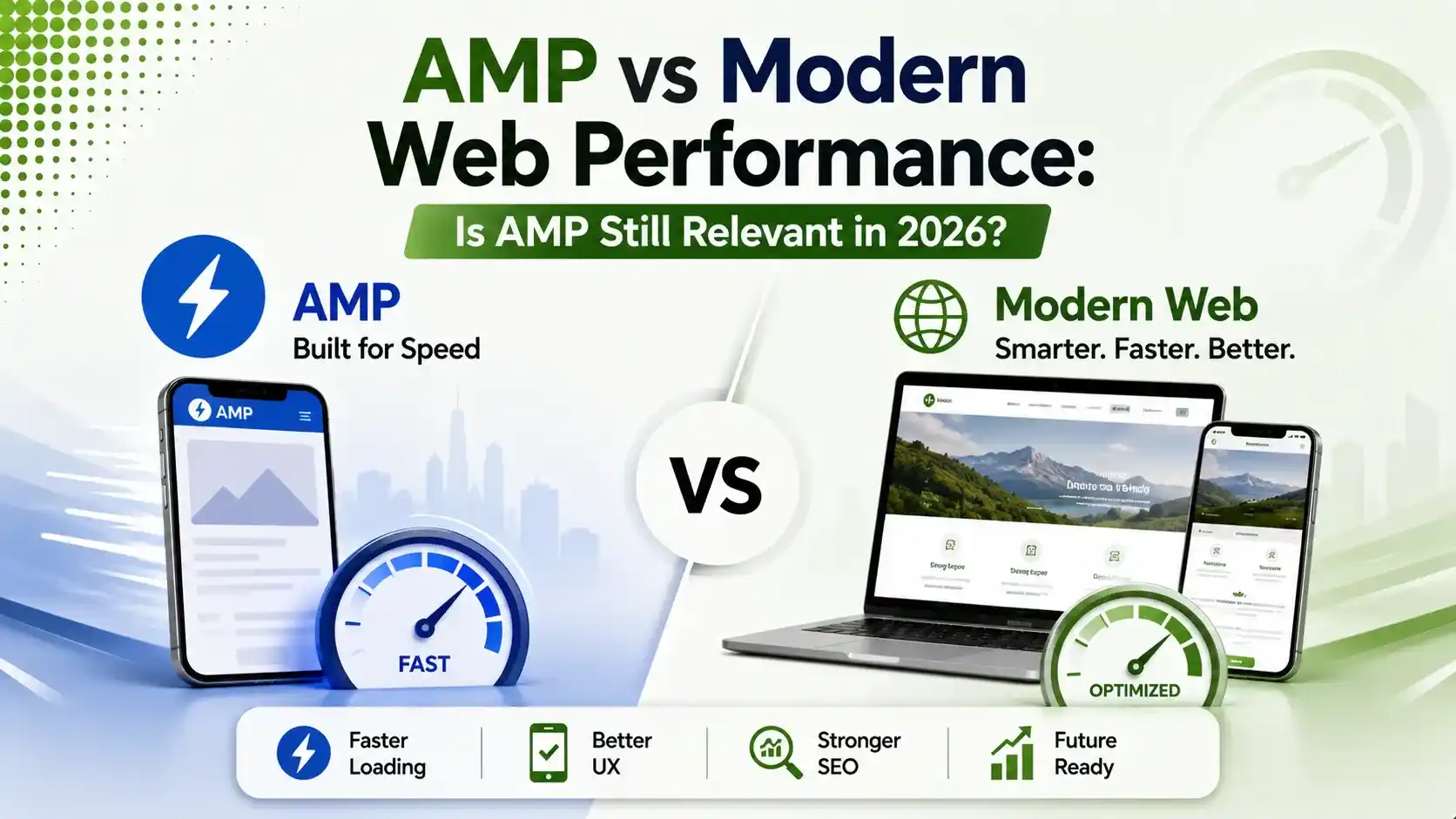
AMP's ranking advantage disappeared in 2021, and 40% of sites that used it have already left. Here's what the modern performance stack looks like instead.
Table of Contents
ToggleIs AMP still relevant in 2026? For nearly every new website, no. The lightning bolt badge is gone, the Top Stories requirement disappeared back in 2021, and the AMP WordPress plugin has seen an 80% drop in downloads from its peak. AMP vs modern web performance isn't really a contest anymore, it's a migration checklist.
That wasn't always the story. When Google launched AMP in 2015 and 2016, it solved a genuine problem: mobile pages were bloated, ad-heavy, and painfully slow. AMP forced a stripped-down HTML standard that loaded near-instantly by banning most developer-written JavaScript.
The framework still technically works. Google hasn't shut down the AMP cache, and pages built on it still function. What changed is the ecosystem around it, the ranking incentive, the badge, the Top Stories exclusivity, all of it collapsed once Core Web Vitals took over as the actual performance signal.
This guide breaks down what replaced AMP, whether it still makes sense in any specific situation, and how to build a modern page that beats AMP's old promises without its restrictions.
01What AMP Was Actually Built to Solve
Sayt.uz's 2026 retrospective on AMP's decline lays out the original premise plainly: "the web is too slow because developers are bad at JavaScript." Google's fix was to ban most author-written JavaScript entirely, cap inline CSS, and serve every page from Google's own cache instead of the publisher's server.
It worked, in narrow terms. TheStacc's 2026 AMP guide notes AMP pages loaded roughly 88% faster than standard mobile pages on average during AMP's prime years, and that speed advantage is exactly what earned publishers a spot in the Top Stories carousel and a lightning bolt badge in search results.
02The 2021 Turning Point That Changed Everything
Wiserank's 2026 breakdown of AMP and SEO pinpoints the exact shift: in 2021, Google officially removed AMP as a requirement for appearing in Top Stories. Non-AMP pages that met Core Web Vitals thresholds could now compete equally for the same placement.
Sayt.uz's analysis, referenced above, adds important context for why that decision happened: antitrust investigations and complaints from European publishers about AMP's monopolistic structure pushed Google to rethink the entire program, not just a routine algorithm tweak.
WPPoland's 2026 engineering analysis highlights a problem that outlasted the ranking change: AMP cache URLs displayed as "google.com/amp/s/" instead of the publisher's own domain, which confused users about who actually owned the content and noticeably hurt brand recognition.
03Is AMP Still Relevant in 2026? The Short Answer
DynoMapper's 2026 guide answers the framing question directly: technically, AMP still exists and still works. Practically, no, Google no longer gives AMP pages any ranking advantage, the badge is gone, and most major publishers have migrated away entirely.
White Label SEO Service's decision framework confirms Google's own position on this: the company has said repeatedly since 2021 that AMP is not a direct ranking factor. Google now treats it as one possible approach to achieving good page experience, not a preferred or rewarded one.
04AMP vs Core Web Vitals: How They Actually Differ
Wiserank's breakdown, referenced above, draws the clearest line between the two approaches: Core Web Vitals measure real user experience directly, LCP, INP, and CLS, on whatever page architecture you choose. AMP measured technical performance under Google's own cache, a proxy for speed rather than speed itself.
That distinction matters because it removed AMP's built-in advantage. A well-optimized standard page, built with modern frameworks and proper caching, can now hit the same Core Web Vitals thresholds AMP was designed to guarantee, without AMP's restrictions on JavaScript and design flexibility.
05The Modern Performance Stack That Replaced AMP
Sayt.uz's analysis lays out the philosophy shift clearly: modern web optimization means engineering directly for Core Web Vitals metrics rather than for a proprietary Google format. In practice, that means inlining critical CSS, lazy loading below-the-fold images, adopting next-generation image formats, and reducing latency through CDN and edge caching.
Use AVIF for images, roughly 50% smaller than WebP and supported by all modern browsers.
Delay non-critical JavaScript like chat widgets and tracking pixels until after user interaction to protect INP.
Serve pages from edge caching, CDN-level full-page caching now matches or beats what AMP Cache once offered.
Preload critical resources like fonts and hero images so the browser fetches them before they're requested.
Reserve space for images and ads with explicit dimensions to prevent layout shift and protect CLS.
06Where AMP Still Has a Narrow Use Case
AMP hasn't vanished entirely. InMotion Marketing's 2026 guide notes publishers managing thousands of posts inside a CMS may still benefit from AMP's streamlined publishing workflow, and heavy-advertising publishers can see improved ad viewability when AMP is implemented correctly.
SpaceLama's 2026 analysis adds a useful filter for deciding: if a large share of your traffic comes from Google Discover, news search, or informational queries, AMP's Core Web Vitals advantage can still matter. If most traffic arrives through branded search, social, paid ads, or direct visits, that advantage becomes far less relevant than functionality, personalization, and branding.
There's also one genuine exception worth naming directly: AMP for Email, which Gmail still supports for interactive, dynamic email experiences like submitting a form without leaving the inbox, a niche Aspiration Marketing's 2026 overview also flags as one of AMP's few remaining strongholds.
07AMP vs Modern Web Performance at a Glance
Gtechme's 2026 assessment and DynoMapper's guide, both referenced above, converge on a similar practical comparison across the factors that matter for a real decision.
| Factor | AMP | Modern Performance Stack |
|---|---|---|
| Ranking advantage | None since 2021 | None inherent; Core Web Vitals apply equally |
| Top Stories eligibility | No longer required | Any page meeting Core Web Vitals qualifies |
| Design flexibility | Heavily restricted JavaScript and CSS | Full developer control |
| Brand ownership of URL | Often cached under google.com/amp/ | Full ownership of your own domain |
| Best fit today | Heavy publishers, Discover-driven traffic, AMP Email | Nearly every other site type |
08Modern Core Web Vitals Optimization Snippet
Here's a practical example of the modern-stack approach in action, preloading a hero image, serving AVIF with a fallback, and deferring non-critical JavaScript.
<!-- Preload the hero image for faster LCP -->
<link rel="preload" as="image" href="/hero.avif" type="image/avif">

<!-- Modern image with AVIF, WebP, and JPEG fallback -->
<picture>
  <source srcset="/hero.avif" type="image/avif">
  <source srcset="/hero.webp" type="image/webp">
  <img src="/hero.jpg" alt="Descriptive hero image alt text"
       width="1200" height="630" loading="eager" fetchpriority="high">
</picture>

<!-- Defer non-critical JavaScript until after interaction -->
<script>
  window.addEventListener('scroll', loadChatWidget, { once: true });
  window.addEventListener('click', loadChatWidget, { once: true });
  function loadChatWidget(){
    var s = document.createElement('script');
    s.src = '/chat-widget.js';
    document.body.appendChild(s);
  }
</script>
09AMP Removal Priority Workflow
Five steps cover a safe migration away from AMP. Tap each one for the specific action.
Audit Current AMP Traffic
Check how much traffic actually arrives via AMP pages and whether it comes from Discover, Top Stories, or general search before removing anything.
10AMP Removal Readiness Score
Score your site against the factors that determine whether removing AMP makes sense now.
AMP Removal Readiness Score
Select the option that matches your current situation
11FAQs on AMP vs Modern Web Performance
For most sites, no. AMP provides no ranking advantage, and Core Web Vitals now determine page experience equally for AMP and standard pages.
Usually not, as long as your standard pages pass Core Web Vitals. Most sites that removed AMP saw no SEO loss and often saw engagement improve.
Publishers with heavy Discover or Top Stories traffic, high-volume CMS workflows, or complex ad setups may still see some benefit. Most other sites don't.
Modern frameworks paired with Core Web Vitals optimization: image formats like AVIF, edge caching, deferred JavaScript, and preload directives.
Yes. Gmail still supports AMP for Email, allowing interactive elements like form submissions directly inside an email, unrelated to AMP's web page decline.
Related Articles
What We Learn Today
Google removed AMP's Top Stories requirement back in 2021
AMP has never been a direct Google ranking factor
Core Web Vitals now apply equally to AMP and standard pages
Modern frameworks match AMP speed without its restrictions
AMP still has narrow value for heavy publishers and AMP Email
Most sites that removed AMP saw no SEO loss
Build a Complete Mobile Performance Foundation
Whether you keep or remove AMP, mobile friendliness testing should confirm the results. Explore our mobile testing and Google Maps ranking guides next.
Related Posts
Previous Post
Next Post
Previous Post
Next Post



- Artificial Intelligence
- Content
- Core Web Vitals
- Development
- Digital Marketing
- Display Advertising
- Google Ads
- Google Search Console
- GTM
- HTML
- HTML CSS
- JavaScript
- Keyword Research
- Link Building
- LinkedIn Ads
- Local SEO
- Meta Ads
- Mobile SEO
- Off-Page SEO
- On-Page SEO
- Paid Media
- Paid Media Analytics
- PHP
- PPC Strategy
- Python
- SEO
- SEO Basics
- SEO Tools
- Social
- Technical SEO