
- Home
- SEODiscover the latest updates from across the United States, including politics, culture, economy, and trending stories. Stay informed on the key events shaping the nation and the topics everyone’s talking about.
- Technical SEOLearn technical SEO concepts including crawling, indexing, XML sitemaps, robots.txt, canonical tags, site architecture, and website performance.
- Local SEOOptimize your business for local seo with Google Business Profile, local citations, reviews, maps, and location-based SEO.
- Mobile SEOImprove your website’s mobile seo performance with responsive design, mobile-first indexing, usability, and page speed optimization.
- On-Page SEOExplore on-page seo optimization techniques such as title tags, meta descriptions, headings, URLs, internal linking, and content optimization.
- Off-Page SEODiscover off-page SEO strategies such as backlinks, digital PR, brand mentions, outreach, and authority building.
- SEO ToolsExplore the best SEO tools for keyword research, technical audits, backlink analysis, rank tracking, and website optimization.
- Core Web VitalsLearn how to improve Core Web Vitals including LCP, INP, CLS, page speed, and overall user experience for better rankings.
- Keyword ResearchLearn how to find profitable keywords, analyze search intent, evaluate competition, and build effective keyword strategies.
- Link BuildingMaster ethical link building techniques, backlink analysis, outreach methods, guest posting, and authority growth strategies.
- Google Search ConsoleLearn how to use Google Search Console to monitor indexing, fix errors, analyze search performance, and improve SEO.
- SEO BasicsLearn the fundamentals of search engine optimization (SEO Basics), including how search engines work, SEO terminology, and beginner-friendly best practices.
- Paid Media
- Display AdvertisingLearn display advertising strategies, banner ads, audience targeting, remarketing, Google Display campaigns, and optimization techniques.
- Google AdsLearn Google Ads strategies, campaign setup, bidding, keywords, Performance Max, Search Ads, and optimization techniques.
- LinkedIn AdsLearn LinkedIn Ads strategies for B2B marketing, lead generation, audience targeting, campaign optimization, and paid social advertising.
- Meta AdsLearn Meta Ads strategies for Facebook and Instagram, including campaign setup, targeting, retargeting, and performance optimization.
- Paid Media AnalyticsLearn paid media analytics, including CPC, CTR, CPA, ROAS, conversion tracking, attribution, reporting, and campaign performance analysis.
- PPC StrategyLearn effective PPC strategies, campaign planning, bidding, keyword targeting, landing pages, conversion optimization, and more.
- ContentTransform your living spaces with inspiration, tips, and trends in interior design. From minimalist decor to bold statements, find ideas for every style and budget.
- Social
- Digital MarketingExplore stories and advice on living your best life. From personal growth to entertainment, dive into the latest in lifestyle trends and inspiration.
- Artificial IntelligenceStay informed about health and wellness with expert advice, fitness tips, and the latest medical breakthroughs. Your guide to a healthier and happier life.
- DevelopmentYou will find development related educational articles
- GTMLearn Google Tag Manager (GTM) with practical guides for tags, triggers, variables, tracking, conversions, and website analytics implementation.
- HTMLLearn HTML with simple tutorials, examples, tags, elements, attributes, and best practices for building modern web pages.
- HTML CSSLearn HTML CSS together with practical tutorials, examples, layouts, styling techniques, responsive design, and modern web development practices.
- HTML JSLearn HTML JS – JavaScript with practical tutorials and examples for adding interactivity, dynamic content, events, and functionality to web pages.
- JavaScriptExplore JavaScript tutorials, examples, concepts, and practical techniques for creating interactive and dynamic websites and web applications.
- PHPLearn PHP programming with practical tutorials, examples, functions, syntax, and web development techniques for beginners and developers.
- PythonLearn Python programming with practical tutorials, examples, syntax, functions, automation techniques, and useful programming concepts.
- Home
- SEODiscover the latest updates from across the United States, including politics, culture, economy, and trending stories. Stay informed on the key events shaping the nation and the topics everyone’s talking about.
- Technical SEOLearn technical SEO concepts including crawling, indexing, XML sitemaps, robots.txt, canonical tags, site architecture, and website performance.
- Local SEOOptimize your business for local seo with Google Business Profile, local citations, reviews, maps, and location-based SEO.
- Mobile SEOImprove your website’s mobile seo performance with responsive design, mobile-first indexing, usability, and page speed optimization.
- On-Page SEOExplore on-page seo optimization techniques such as title tags, meta descriptions, headings, URLs, internal linking, and content optimization.
- Off-Page SEODiscover off-page SEO strategies such as backlinks, digital PR, brand mentions, outreach, and authority building.
- SEO ToolsExplore the best SEO tools for keyword research, technical audits, backlink analysis, rank tracking, and website optimization.
- Core Web VitalsLearn how to improve Core Web Vitals including LCP, INP, CLS, page speed, and overall user experience for better rankings.
- Keyword ResearchLearn how to find profitable keywords, analyze search intent, evaluate competition, and build effective keyword strategies.
- Link BuildingMaster ethical link building techniques, backlink analysis, outreach methods, guest posting, and authority growth strategies.
- Google Search ConsoleLearn how to use Google Search Console to monitor indexing, fix errors, analyze search performance, and improve SEO.
- SEO BasicsLearn the fundamentals of search engine optimization (SEO Basics), including how search engines work, SEO terminology, and beginner-friendly best practices.
- Paid Media
- Display AdvertisingLearn display advertising strategies, banner ads, audience targeting, remarketing, Google Display campaigns, and optimization techniques.
- Google AdsLearn Google Ads strategies, campaign setup, bidding, keywords, Performance Max, Search Ads, and optimization techniques.
- LinkedIn AdsLearn LinkedIn Ads strategies for B2B marketing, lead generation, audience targeting, campaign optimization, and paid social advertising.
- Meta AdsLearn Meta Ads strategies for Facebook and Instagram, including campaign setup, targeting, retargeting, and performance optimization.
- Paid Media AnalyticsLearn paid media analytics, including CPC, CTR, CPA, ROAS, conversion tracking, attribution, reporting, and campaign performance analysis.
- PPC StrategyLearn effective PPC strategies, campaign planning, bidding, keyword targeting, landing pages, conversion optimization, and more.
- ContentTransform your living spaces with inspiration, tips, and trends in interior design. From minimalist decor to bold statements, find ideas for every style and budget.
- Social
- Digital MarketingExplore stories and advice on living your best life. From personal growth to entertainment, dive into the latest in lifestyle trends and inspiration.
- Artificial IntelligenceStay informed about health and wellness with expert advice, fitness tips, and the latest medical breakthroughs. Your guide to a healthier and happier life.
- DevelopmentYou will find development related educational articles
- GTMLearn Google Tag Manager (GTM) with practical guides for tags, triggers, variables, tracking, conversions, and website analytics implementation.
- HTMLLearn HTML with simple tutorials, examples, tags, elements, attributes, and best practices for building modern web pages.
- HTML CSSLearn HTML CSS together with practical tutorials, examples, layouts, styling techniques, responsive design, and modern web development practices.
- HTML JSLearn HTML JS – JavaScript with practical tutorials and examples for adding interactivity, dynamic content, events, and functionality to web pages.
- JavaScriptExplore JavaScript tutorials, examples, concepts, and practical techniques for creating interactive and dynamic websites and web applications.
- PHPLearn PHP programming with practical tutorials, examples, functions, syntax, and web development techniques for beginners and developers.
- PythonLearn Python programming with practical tutorials, examples, syntax, functions, automation techniques, and useful programming concepts.
Now Reading: How to Automatically Generate Table of Contents from Headings
-
01
How to Automatically Generate Table of Contents from Headings
- Home//
- SEO//Discover the latest updates from across the United States, including politics, culture, economy, and trending stories. Stay informed on the key events shaping the nation and the topics everyone’s talking about.
- Technical SEO//Learn technical SEO concepts including crawling, indexing, XML sitemaps, robots.txt, canonical tags, site architecture, and website performance.
- Local SEO//Optimize your business for local seo with Google Business Profile, local citations, reviews, maps, and location-based SEO.
- Mobile SEO//Improve your website’s mobile seo performance with responsive design, mobile-first indexing, usability, and page speed optimization.
- On-Page SEO//Explore on-page seo optimization techniques such as title tags, meta descriptions, headings, URLs, internal linking, and content optimization.
- Off-Page SEO//Discover off-page SEO strategies such as backlinks, digital PR, brand mentions, outreach, and authority building.
- SEO Tools//Explore the best SEO tools for keyword research, technical audits, backlink analysis, rank tracking, and website optimization.
- Core Web Vitals//Learn how to improve Core Web Vitals including LCP, INP, CLS, page speed, and overall user experience for better rankings.
- Keyword Research//Learn how to find profitable keywords, analyze search intent, evaluate competition, and build effective keyword strategies.
- Link Building//Master ethical link building techniques, backlink analysis, outreach methods, guest posting, and authority growth strategies.
- Google Search Console//Learn how to use Google Search Console to monitor indexing, fix errors, analyze search performance, and improve SEO.
- SEO Basics//Learn the fundamentals of search engine optimization (SEO Basics), including how search engines work, SEO terminology, and beginner-friendly best practices.
- Paid Media//
- Display Advertising//Learn display advertising strategies, banner ads, audience targeting, remarketing, Google Display campaigns, and optimization techniques.
- Google Ads//Learn Google Ads strategies, campaign setup, bidding, keywords, Performance Max, Search Ads, and optimization techniques.
- LinkedIn Ads//Learn LinkedIn Ads strategies for B2B marketing, lead generation, audience targeting, campaign optimization, and paid social advertising.
- Meta Ads//Learn Meta Ads strategies for Facebook and Instagram, including campaign setup, targeting, retargeting, and performance optimization.
- Paid Media Analytics//Learn paid media analytics, including CPC, CTR, CPA, ROAS, conversion tracking, attribution, reporting, and campaign performance analysis.
- PPC Strategy//Learn effective PPC strategies, campaign planning, bidding, keyword targeting, landing pages, conversion optimization, and more.
- Content//Transform your living spaces with inspiration, tips, and trends in interior design. From minimalist decor to bold statements, find ideas for every style and budget.
- Social//
- Digital Marketing//Explore stories and advice on living your best life. From personal growth to entertainment, dive into the latest in lifestyle trends and inspiration.
- Artificial Intelligence//Stay informed about health and wellness with expert advice, fitness tips, and the latest medical breakthroughs. Your guide to a healthier and happier life.
- Development//You will find development related educational articles
- GTM//Learn Google Tag Manager (GTM) with practical guides for tags, triggers, variables, tracking, conversions, and website analytics implementation.
- HTML//Learn HTML with simple tutorials, examples, tags, elements, attributes, and best practices for building modern web pages.
- HTML CSS//Learn HTML CSS together with practical tutorials, examples, layouts, styling techniques, responsive design, and modern web development practices.
- HTML JS//Learn HTML JS – JavaScript with practical tutorials and examples for adding interactivity, dynamic content, events, and functionality to web pages.
- JavaScript//Explore JavaScript tutorials, examples, concepts, and practical techniques for creating interactive and dynamic websites and web applications.
- PHP//Learn PHP programming with practical tutorials, examples, functions, syntax, and web development techniques for beginners and developers.
- Python//Learn Python programming with practical tutorials, examples, syntax, functions, automation techniques, and useful programming concepts.
- Home
- Development
- JavaScript
- How to Automatically Generate Table of Contents from Headings
How to Automatically Generate Table of Contents from Headings

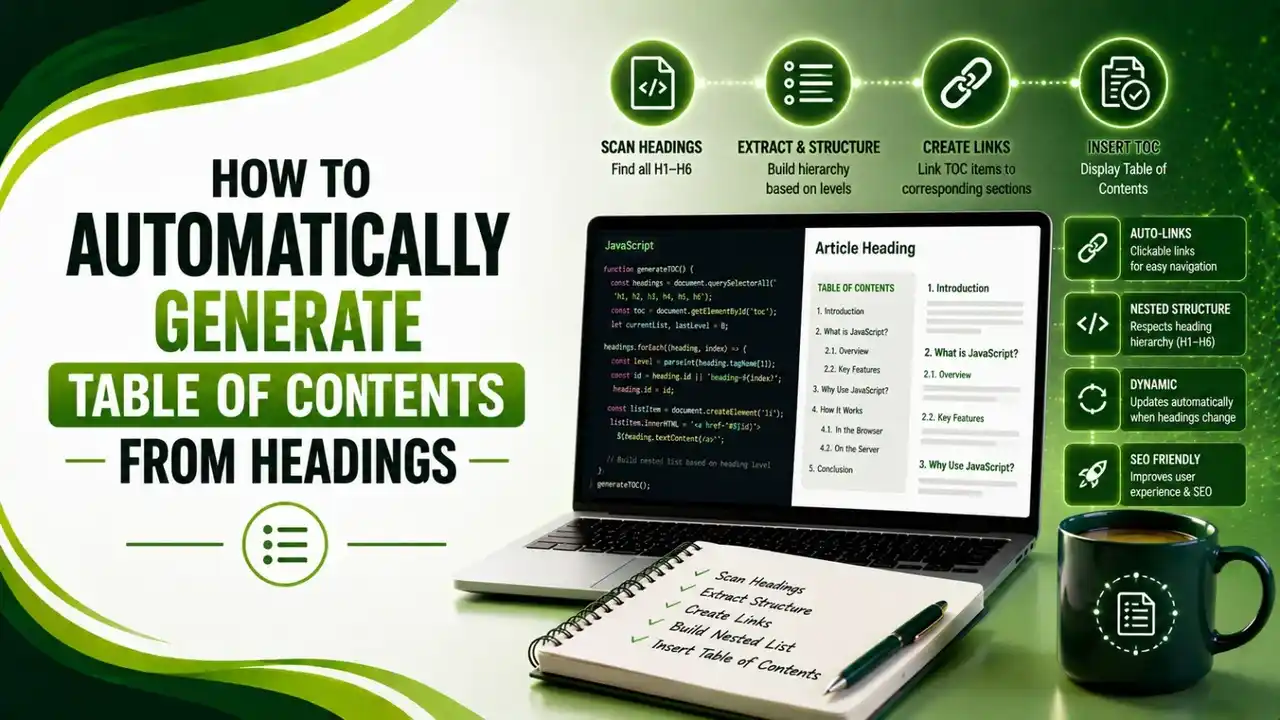
Automatically generate table of contents from headings using vanilla JS — no library needed. Slugified IDs, nesting, and active-section highlighting.
Table of Contents
ToggleAutomatically generating a table of contents from headings comes down to three steps: query every heading in your content, generate a unique, URL-safe ID for each one, then build a linked list pointing to those IDs. No framework or library is required, vanilla JavaScript handles this in under 40 lines.
Auto Generate Table of Contents
A dynamic table of contents stays in sync with your content automatically, so adding or removing a section never leaves a stale, hand-maintained list behind.
Here's the working code for basic generation, collision-safe ID slugification, and active-section highlighting using IntersectionObserver.
01Basic Table of Contents Generator
Query headings with a scoped selector to avoid pulling in unrelated headings from your header, sidebar, or footer. This example targets only headings inside a content container.
function generateTOC(contentSelector, tocSelector, levels = 'h2, h3') {
  const content = document.querySelector(contentSelector);
  const tocContainer = document.querySelector(tocSelector);
  const headings = content.querySelectorAll(levels);

  if (headings.length < 2) return; // Skip TOC on short articles

  const list = document.createElement('ol');

  headings.forEach((heading, index) => {
    if (!heading.id) {
      heading.id = `section-${index}`;
    }

    const listItem = document.createElement('li');
    const link = document.createElement('a');
    link.href = `#${heading.id}`;
    link.textContent = heading.textContent;

    listItem.appendChild(link);
    list.appendChild(listItem);
  });

  tocContainer.appendChild(list);
}

generateTOC('.article-content', '#toc');
02Collision-Safe, URL-Friendly IDs
Auto-generated IDs like "section-0" work but aren't meaningful in a URL. Slugifying the actual heading text creates readable anchors, and a duplicate counter prevents two identical headings from colliding on the same ID.
function slugify(text) {
  return text
    .toLowerCase()
    .trim()
    .replace(/[^\w\s-]/g, '')   // Remove special characters
    .replace(/[\s_]+/g, '-')    // Replace spaces/underscores with hyphens
    .replace(/^-+|-+$/g, '');   // Trim leading/trailing hyphens
}

function assignUniqueIds(headings) {
  const usedIds = new Set();

  headings.forEach(heading => {
    if (heading.id) {
      usedIds.add(heading.id);
      return;
    }

    let baseId = slugify(heading.textContent);
    let finalId = baseId;
    let counter = 1;

    // Handle duplicate headings by appending a counter
    while (usedIds.has(finalId)) {
      finalId = `${baseId}-${counter}`;
      counter++;
    }

    heading.id = finalId;
    usedIds.add(finalId);
  });
}
03Accessible, Nested Table of Contents
Wrap the generated list in a nav element with an aria-label to create a proper accessible navigation landmark. This version also nests h3 headings under their parent h2, matching visual and semantic hierarchy.
function generateNestedTOC(contentSelector, tocSelector) {
  const content = document.querySelector(contentSelector);
  const tocContainer = document.querySelector(tocSelector);
  const headings = content.querySelectorAll('h2, h3');

  if (headings.length < 2) return;

  assignUniqueIds(headings); // From the slugify function above

  const nav = document.createElement('nav');
  nav.setAttribute('aria-label', 'Table of contents');

  let currentList = document.createElement('ol');
  let currentSubList = null;
  nav.appendChild(currentList);

  headings.forEach(heading => {
    const link = document.createElement('a');
    link.href = `#${heading.id}`;
    link.textContent = heading.textContent;

    const listItem = document.createElement('li');
    listItem.appendChild(link);

    if (heading.tagName === 'H2') {
      currentList.appendChild(listItem);
      currentSubList = document.createElement('ol');
      listItem.appendChild(currentSubList);
    } else if (currentSubList) {
      currentSubList.appendChild(listItem);
    }
  });

  tocContainer.appendChild(nav);
}
04Highlighting the Active Section on Scroll
IntersectionObserver is the modern, efficient way to highlight the active section as a reader scrolls, avoiding the performance cost of listening to scroll events directly.
function highlightActiveSection(contentSelector, tocSelector) {
  const headings = document.querySelectorAll(`${contentSelector} h2, ${contentSelector} h3`);
  const tocLinks = document.querySelectorAll(`${tocSelector} a`);

  const observer = new IntersectionObserver((entries) => {
    entries.forEach(entry => {
      if (entry.isIntersecting) {
        tocLinks.forEach(link => link.classList.remove('active'));
        const activeLink = document.querySelector(`${tocSelector} a[href="#${entry.target.id}"]`);
        if (activeLink) activeLink.classList.add('active');
      }
    });
  }, { rootMargin: '0px 0px -70% 0px' });

  headings.forEach(heading => observer.observe(heading));
}

highlightActiveSection('.article-content', '#toc');
05Approach Comparison
A quick reference for choosing between a custom script and an off-the-shelf library.
| Approach | Best For | Trade-off |
|---|---|---|
| Custom vanilla JS (above) | Full control, no dependencies, small pages | You maintain the code yourself |
| Tocbot (library) | Documentation sites, scrollspy support built in | Small added dependency (~3.6KB) |
| jQuery TOC plugins | Legacy sites already using jQuery | Requires jQuery as a dependency |
| CMS-native TOC blocks | WordPress/CMS users wanting zero code | Less customizable than a hand-written script |
06Practical Notes Before Implementing
A few things worth confirming before shipping any TOC script to production.
Scope your heading query, use a content container selector, not a bare document.querySelectorAll on the whole page.
Skip TOC generation on short pages, most implementations abort below 2 headings to avoid cluttering brief content.
Slugify heading text for IDs, readable anchors help both users and crawlers understand page structure.
Handle duplicate heading text, a counter suffix prevents ID collisions across repeated section titles.
Wrap the output in a nav with aria-label, this creates a proper accessibility landmark for screen readers.
07Common Questions
No. Vanilla JavaScript can generate a fully working, accessible table of contents in under 40 lines, with no external dependencies required.
Without handling this, both would get the same slugified ID, breaking anchor links. A duplicate counter appends a number to the second occurrence to keep IDs unique.
No. Most implementations skip generation on pages with fewer than two headings, since a table of contents adds clutter without real navigational value on short content.
Use IntersectionObserver rather than a scroll event listener. It's more performant and lets you detect which heading is currently in view without constant recalculation.
Yes. Track the current top-level list item while iterating headings, and append any subsequent lower-level heading (like h3) into a nested list under it.
Related Articles
What We Learn Today
A working TOC needs no library, just query, ID, and link
Slugified text makes anchors readable and meaningful
A duplicate counter prevents ID collisions on repeated headings
Nav with aria-label creates a proper accessibility landmark
IntersectionObserver beats scroll listeners for active highlighting
Most implementations skip TOC generation below 2 headings
Build a Complete Technical SEO Toolkit
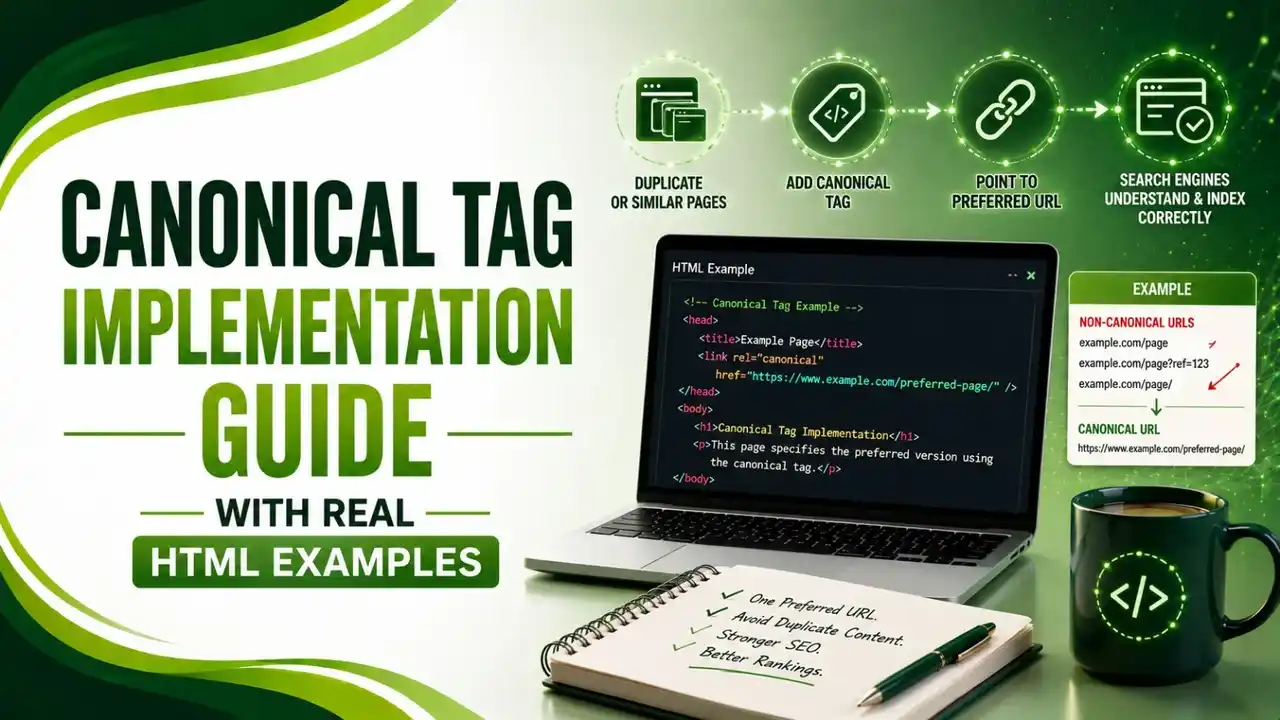
Table of contents generation pairs well with broken link detection and canonical tag setup. Explore both guides next.
Related Posts

Previous Post
Next Post
Previous Post
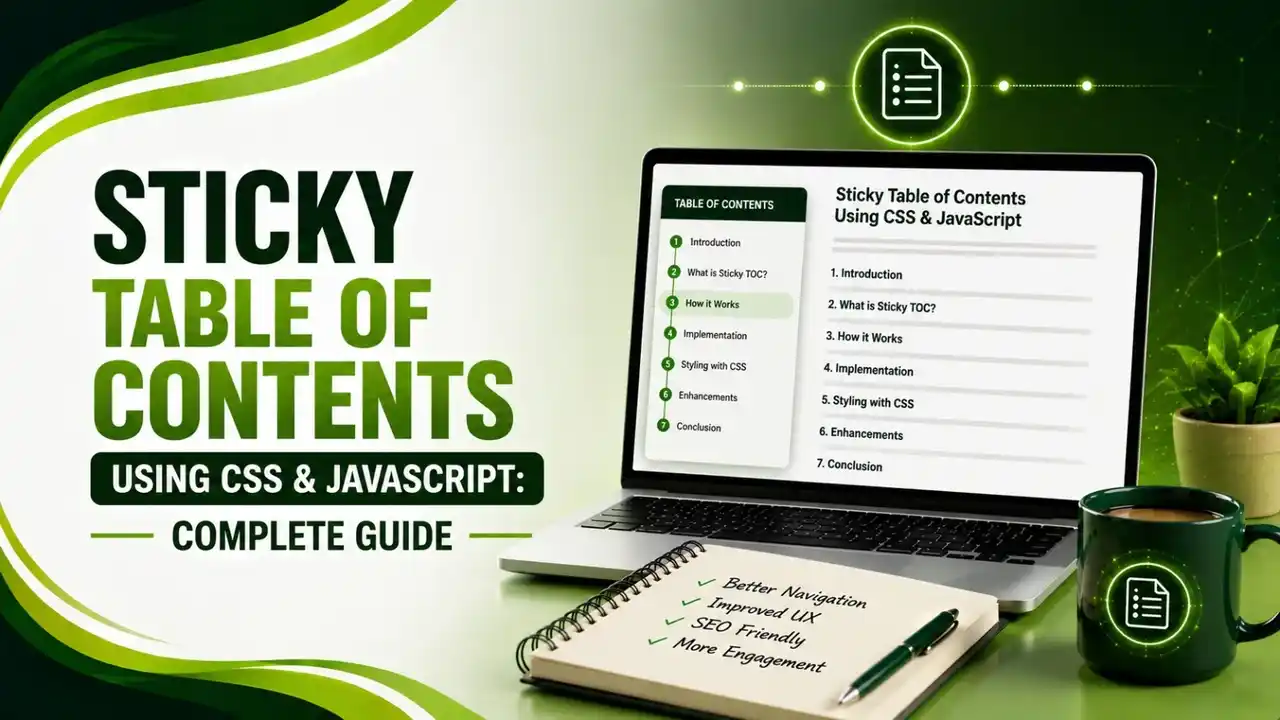
Next Post




- Artificial Intelligence
- Content
- Core Web Vitals
- Development
- Digital Marketing
- Display Advertising
- Google Ads
- Google Search Console
- GTM
- HTML
- HTML CSS
- JavaScript
- Keyword Research
- Link Building
- LinkedIn Ads
- Local SEO
- Meta Ads
- Mobile SEO
- Off-Page SEO
- On-Page SEO
- Paid Media
- Paid Media Analytics
- PHP
- PPC Strategy
- Python
- SEO
- SEO Basics
- SEO Tools
- Social
- Technical SEO