
- Home
- SEODiscover the latest updates from across the United States, including politics, culture, economy, and trending stories. Stay informed on the key events shaping the nation and the topics everyone’s talking about.
- Technical SEOLearn technical SEO concepts including crawling, indexing, XML sitemaps, robots.txt, canonical tags, site architecture, and website performance.
- Local SEOOptimize your business for local seo with Google Business Profile, local citations, reviews, maps, and location-based SEO.
- Mobile SEOImprove your website’s mobile seo performance with responsive design, mobile-first indexing, usability, and page speed optimization.
- On-Page SEOExplore on-page seo optimization techniques such as title tags, meta descriptions, headings, URLs, internal linking, and content optimization.
- Off-Page SEODiscover off-page SEO strategies such as backlinks, digital PR, brand mentions, outreach, and authority building.
- SEO ToolsExplore the best SEO tools for keyword research, technical audits, backlink analysis, rank tracking, and website optimization.
- Core Web VitalsLearn how to improve Core Web Vitals including LCP, INP, CLS, page speed, and overall user experience for better rankings.
- Keyword ResearchLearn how to find profitable keywords, analyze search intent, evaluate competition, and build effective keyword strategies.
- Link BuildingMaster ethical link building techniques, backlink analysis, outreach methods, guest posting, and authority growth strategies.
- Google Search ConsoleLearn how to use Google Search Console to monitor indexing, fix errors, analyze search performance, and improve SEO.
- SEO BasicsLearn the fundamentals of search engine optimization (SEO Basics), including how search engines work, SEO terminology, and beginner-friendly best practices.
- Paid Media
- Display AdvertisingLearn display advertising strategies, banner ads, audience targeting, remarketing, Google Display campaigns, and optimization techniques.
- Google AdsLearn Google Ads strategies, campaign setup, bidding, keywords, Performance Max, Search Ads, and optimization techniques.
- LinkedIn AdsLearn LinkedIn Ads strategies for B2B marketing, lead generation, audience targeting, campaign optimization, and paid social advertising.
- Meta AdsLearn Meta Ads strategies for Facebook and Instagram, including campaign setup, targeting, retargeting, and performance optimization.
- Paid Media AnalyticsLearn paid media analytics, including CPC, CTR, CPA, ROAS, conversion tracking, attribution, reporting, and campaign performance analysis.
- PPC StrategyLearn effective PPC strategies, campaign planning, bidding, keyword targeting, landing pages, conversion optimization, and more.
- ContentTransform your living spaces with inspiration, tips, and trends in interior design. From minimalist decor to bold statements, find ideas for every style and budget.
- Social
- Digital MarketingExplore stories and advice on living your best life. From personal growth to entertainment, dive into the latest in lifestyle trends and inspiration.
- Artificial IntelligenceStay informed about health and wellness with expert advice, fitness tips, and the latest medical breakthroughs. Your guide to a healthier and happier life.
- DevelopmentYou will find development related educational articles
- GTMLearn Google Tag Manager (GTM) with practical guides for tags, triggers, variables, tracking, conversions, and website analytics implementation.
- HTMLLearn HTML with simple tutorials, examples, tags, elements, attributes, and best practices for building modern web pages.
- HTML CSSLearn HTML CSS together with practical tutorials, examples, layouts, styling techniques, responsive design, and modern web development practices.
- HTML JSLearn HTML JS – JavaScript with practical tutorials and examples for adding interactivity, dynamic content, events, and functionality to web pages.
- JavaScriptExplore JavaScript tutorials, examples, concepts, and practical techniques for creating interactive and dynamic websites and web applications.
- PHPLearn PHP programming with practical tutorials, examples, functions, syntax, and web development techniques for beginners and developers.
- PythonLearn Python programming with practical tutorials, examples, syntax, functions, automation techniques, and useful programming concepts.
- Home
- SEODiscover the latest updates from across the United States, including politics, culture, economy, and trending stories. Stay informed on the key events shaping the nation and the topics everyone’s talking about.
- Technical SEOLearn technical SEO concepts including crawling, indexing, XML sitemaps, robots.txt, canonical tags, site architecture, and website performance.
- Local SEOOptimize your business for local seo with Google Business Profile, local citations, reviews, maps, and location-based SEO.
- Mobile SEOImprove your website’s mobile seo performance with responsive design, mobile-first indexing, usability, and page speed optimization.
- On-Page SEOExplore on-page seo optimization techniques such as title tags, meta descriptions, headings, URLs, internal linking, and content optimization.
- Off-Page SEODiscover off-page SEO strategies such as backlinks, digital PR, brand mentions, outreach, and authority building.
- SEO ToolsExplore the best SEO tools for keyword research, technical audits, backlink analysis, rank tracking, and website optimization.
- Core Web VitalsLearn how to improve Core Web Vitals including LCP, INP, CLS, page speed, and overall user experience for better rankings.
- Keyword ResearchLearn how to find profitable keywords, analyze search intent, evaluate competition, and build effective keyword strategies.
- Link BuildingMaster ethical link building techniques, backlink analysis, outreach methods, guest posting, and authority growth strategies.
- Google Search ConsoleLearn how to use Google Search Console to monitor indexing, fix errors, analyze search performance, and improve SEO.
- SEO BasicsLearn the fundamentals of search engine optimization (SEO Basics), including how search engines work, SEO terminology, and beginner-friendly best practices.
- Paid Media
- Display AdvertisingLearn display advertising strategies, banner ads, audience targeting, remarketing, Google Display campaigns, and optimization techniques.
- Google AdsLearn Google Ads strategies, campaign setup, bidding, keywords, Performance Max, Search Ads, and optimization techniques.
- LinkedIn AdsLearn LinkedIn Ads strategies for B2B marketing, lead generation, audience targeting, campaign optimization, and paid social advertising.
- Meta AdsLearn Meta Ads strategies for Facebook and Instagram, including campaign setup, targeting, retargeting, and performance optimization.
- Paid Media AnalyticsLearn paid media analytics, including CPC, CTR, CPA, ROAS, conversion tracking, attribution, reporting, and campaign performance analysis.
- PPC StrategyLearn effective PPC strategies, campaign planning, bidding, keyword targeting, landing pages, conversion optimization, and more.
- ContentTransform your living spaces with inspiration, tips, and trends in interior design. From minimalist decor to bold statements, find ideas for every style and budget.
- Social
- Digital MarketingExplore stories and advice on living your best life. From personal growth to entertainment, dive into the latest in lifestyle trends and inspiration.
- Artificial IntelligenceStay informed about health and wellness with expert advice, fitness tips, and the latest medical breakthroughs. Your guide to a healthier and happier life.
- DevelopmentYou will find development related educational articles
- GTMLearn Google Tag Manager (GTM) with practical guides for tags, triggers, variables, tracking, conversions, and website analytics implementation.
- HTMLLearn HTML with simple tutorials, examples, tags, elements, attributes, and best practices for building modern web pages.
- HTML CSSLearn HTML CSS together with practical tutorials, examples, layouts, styling techniques, responsive design, and modern web development practices.
- HTML JSLearn HTML JS – JavaScript with practical tutorials and examples for adding interactivity, dynamic content, events, and functionality to web pages.
- JavaScriptExplore JavaScript tutorials, examples, concepts, and practical techniques for creating interactive and dynamic websites and web applications.
- PHPLearn PHP programming with practical tutorials, examples, functions, syntax, and web development techniques for beginners and developers.
- PythonLearn Python programming with practical tutorials, examples, syntax, functions, automation techniques, and useful programming concepts.
Now Reading: The Complete Content Marketing Strategy Guide for 2026
-
01
The Complete Content Marketing Strategy Guide for 2026
- Home//
- SEO//Discover the latest updates from across the United States, including politics, culture, economy, and trending stories. Stay informed on the key events shaping the nation and the topics everyone’s talking about.
- Technical SEO//Learn technical SEO concepts including crawling, indexing, XML sitemaps, robots.txt, canonical tags, site architecture, and website performance.
- Local SEO//Optimize your business for local seo with Google Business Profile, local citations, reviews, maps, and location-based SEO.
- Mobile SEO//Improve your website’s mobile seo performance with responsive design, mobile-first indexing, usability, and page speed optimization.
- On-Page SEO//Explore on-page seo optimization techniques such as title tags, meta descriptions, headings, URLs, internal linking, and content optimization.
- Off-Page SEO//Discover off-page SEO strategies such as backlinks, digital PR, brand mentions, outreach, and authority building.
- SEO Tools//Explore the best SEO tools for keyword research, technical audits, backlink analysis, rank tracking, and website optimization.
- Core Web Vitals//Learn how to improve Core Web Vitals including LCP, INP, CLS, page speed, and overall user experience for better rankings.
- Keyword Research//Learn how to find profitable keywords, analyze search intent, evaluate competition, and build effective keyword strategies.
- Link Building//Master ethical link building techniques, backlink analysis, outreach methods, guest posting, and authority growth strategies.
- Google Search Console//Learn how to use Google Search Console to monitor indexing, fix errors, analyze search performance, and improve SEO.
- SEO Basics//Learn the fundamentals of search engine optimization (SEO Basics), including how search engines work, SEO terminology, and beginner-friendly best practices.
- Paid Media//
- Display Advertising//Learn display advertising strategies, banner ads, audience targeting, remarketing, Google Display campaigns, and optimization techniques.
- Google Ads//Learn Google Ads strategies, campaign setup, bidding, keywords, Performance Max, Search Ads, and optimization techniques.
- LinkedIn Ads//Learn LinkedIn Ads strategies for B2B marketing, lead generation, audience targeting, campaign optimization, and paid social advertising.
- Meta Ads//Learn Meta Ads strategies for Facebook and Instagram, including campaign setup, targeting, retargeting, and performance optimization.
- Paid Media Analytics//Learn paid media analytics, including CPC, CTR, CPA, ROAS, conversion tracking, attribution, reporting, and campaign performance analysis.
- PPC Strategy//Learn effective PPC strategies, campaign planning, bidding, keyword targeting, landing pages, conversion optimization, and more.
- Content//Transform your living spaces with inspiration, tips, and trends in interior design. From minimalist decor to bold statements, find ideas for every style and budget.
- Social//
- Digital Marketing//Explore stories and advice on living your best life. From personal growth to entertainment, dive into the latest in lifestyle trends and inspiration.
- Artificial Intelligence//Stay informed about health and wellness with expert advice, fitness tips, and the latest medical breakthroughs. Your guide to a healthier and happier life.
- Development//You will find development related educational articles
- GTM//Learn Google Tag Manager (GTM) with practical guides for tags, triggers, variables, tracking, conversions, and website analytics implementation.
- HTML//Learn HTML with simple tutorials, examples, tags, elements, attributes, and best practices for building modern web pages.
- HTML CSS//Learn HTML CSS together with practical tutorials, examples, layouts, styling techniques, responsive design, and modern web development practices.
- HTML JS//Learn HTML JS – JavaScript with practical tutorials and examples for adding interactivity, dynamic content, events, and functionality to web pages.
- JavaScript//Explore JavaScript tutorials, examples, concepts, and practical techniques for creating interactive and dynamic websites and web applications.
- PHP//Learn PHP programming with practical tutorials, examples, functions, syntax, and web development techniques for beginners and developers.
- Python//Learn Python programming with practical tutorials, examples, syntax, functions, automation techniques, and useful programming concepts.
The Complete Content Marketing Strategy Guide for 2026

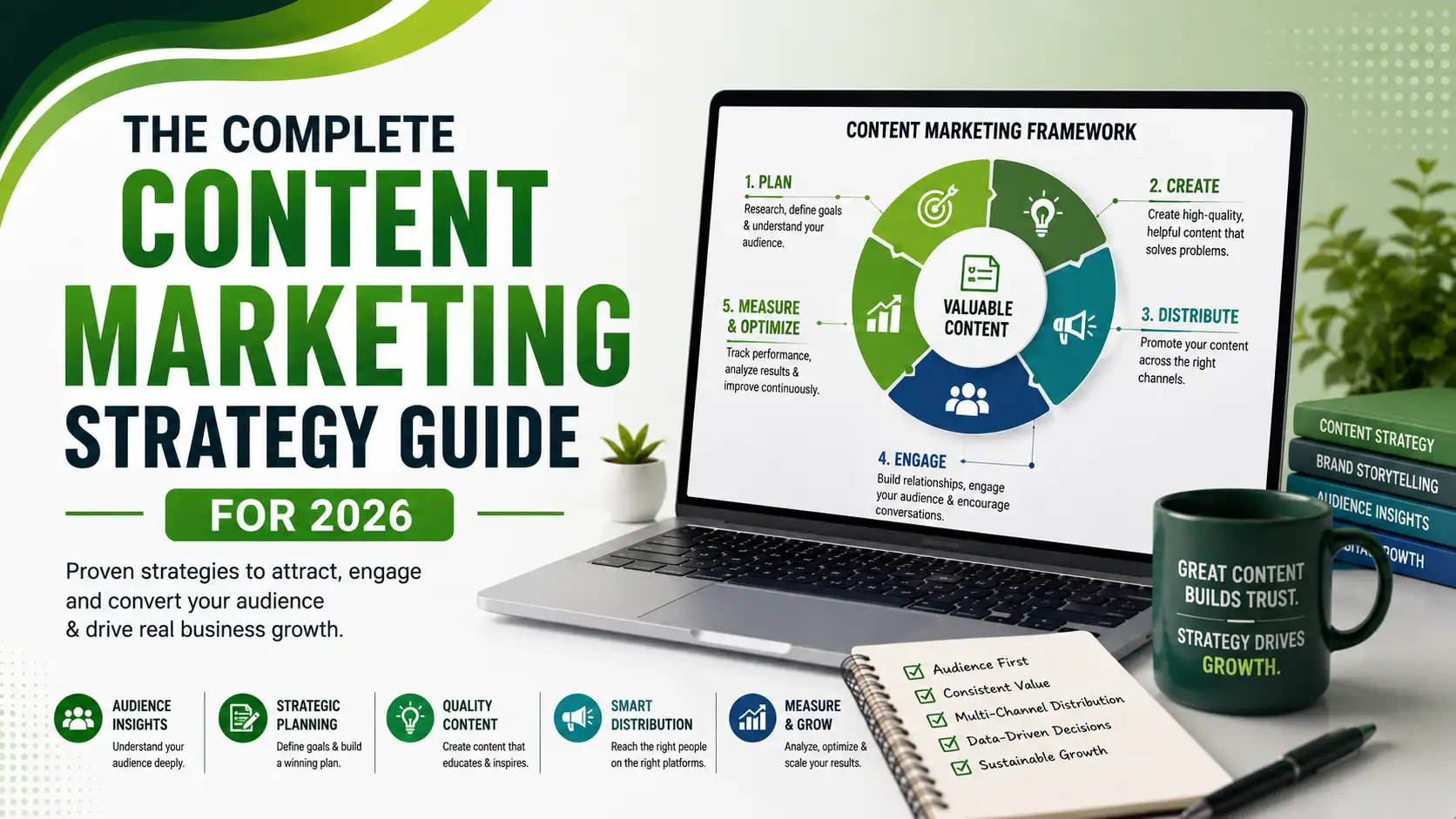
The complete content marketing strategy guide for 2026, why documented strategies generate 3x more leads, and the ROI framework most teams are missing.
Table of Contents
ToggleThe complete content marketing strategy guide for 2026 starts with an uncomfortable statistic: only 29% of B2B marketers rate their content strategy as extremely or very effective. Most teams don't have a strategy, they have a publishing habit, a blog post when someone finds time, a burst of activity before a launch, followed by months of silence.
The businesses winning right now share one trait: businesses that blog consistently see 13x more positive ROI than sporadic publishers, and that gap only widens over time.
Here's the pillar-cluster architecture behind topical authority, the 3-tier framework that actually captures content ROI, and why your content now competes in three places at once, not just Google.
01The Complete Content Marketing Strategy Guide: Why Documentation Wins
DigitalApplied's 2026 statistics compilation confirms the gap is real and widening: organizations with documented strategies generate 3x more leads per dollar spent than those without, and content marketing budgets have risen to 26% of total marketing spend as a result.
SWS Kreatif's guide is blunt about what most companies actually have instead of a strategy: the output exists, but nothing connects it to a business outcome, so nobody can say whether it works. A real strategy answers four questions before any content gets made, what topics you own, what formats you produce, how each piece reaches people, and how you know it worked.
02The Pillar-Cluster Architecture
DevSphere's guide cites a concrete result worth building toward: brands connecting 15 spoke articles to one pillar page see a 52% traffic increase. This is the most effective way to implement content pillars in 2026, a hub page linking out to many specific, deep-dive articles.
KrishTechnolabs' guide adds why this compounds beyond just internal linking: grouped content reinforces topical authority in ways scattered content can't. When you comprehensively cover a subject, search engines recognize you as an authority on that topic faster than when you randomly touch on topics without connecting them.
Entasher's 2026 framework flags a shift most content teams haven't internalized yet: AI assistants now summarize the web for buyers, and in 2026, your content is often not read directly, it's summarized. Making content genuinely easy to quote, with clear, self-contained answers, has become part of writing for humans, not a separate AI-specific task.
03Matching Content to the Buyer's Journey
KrishTechnolabs' guide, referenced above, is specific about the highest-intent content type most brands underinvest in: commercial pillars targeting people who are ready to buy, comparison guides, pricing breakdowns, implementation timelines, and ROI calculators, the content that actually closes deals, not just attracts traffic.
Mirza Creative's guide reinforces the discipline required here: understand the four types of search intent, informational, navigational, transactional, and commercial investigation, and match your content type to the specific stage a reader is actually in, rather than writing everything as generic top-of-funnel education.
04Distribution: The 80/20 Rule
Mirza Creative's guide, referenced above, states the ratio directly: creating great content is only half the battle, distribution determines whether anyone sees it. Follow the 80/20 rule, spend roughly 20% of your time creating content and 80% actively promoting it across owned, earned, and paid channels.
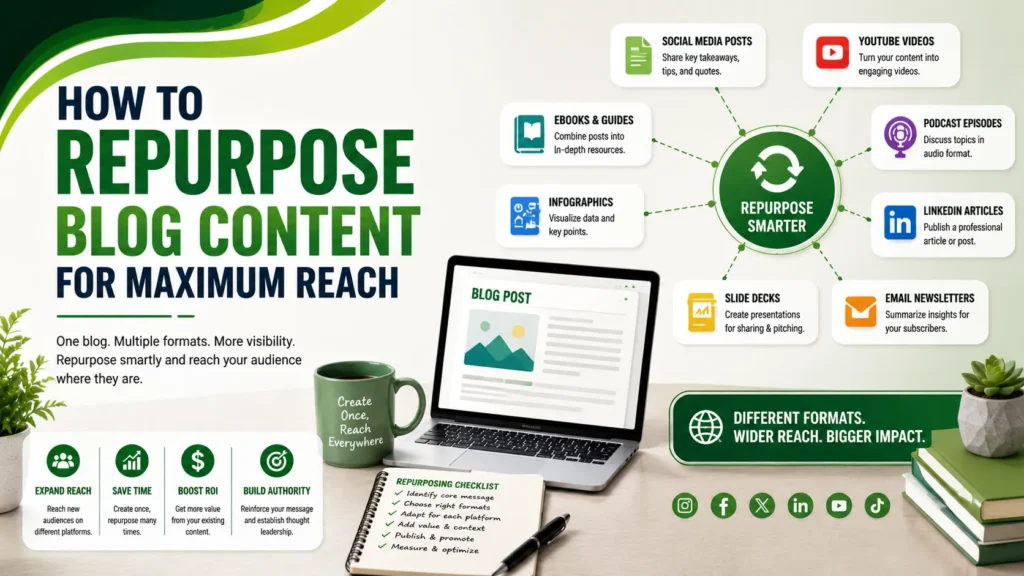
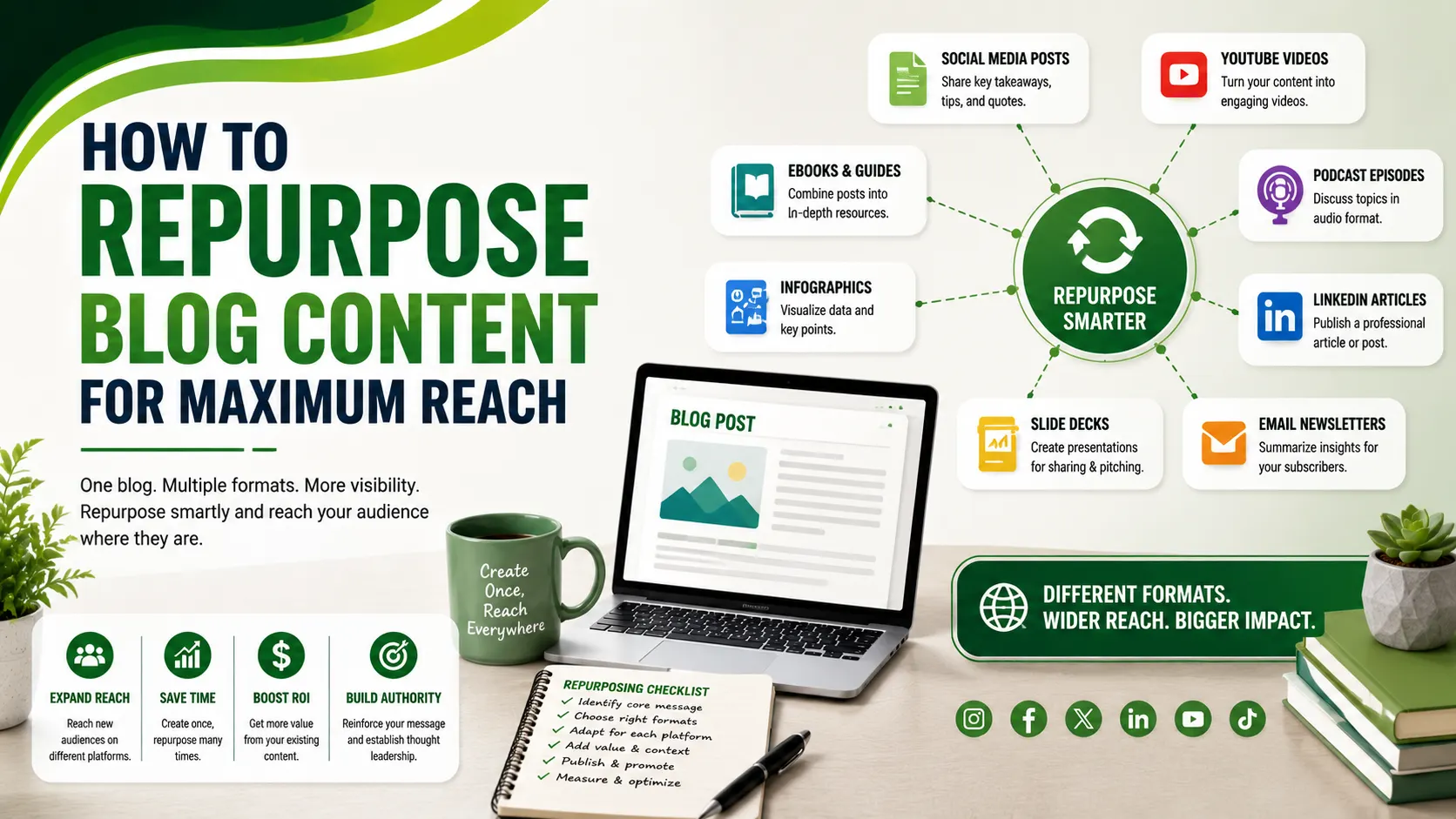
One long-form piece can become 5-10 social posts, an email newsletter, an infographic, and a podcast talking point, all cut from the same research and reporting. Repurposing isn't a shortcut, it's one of the highest-ROI moves available, since the expensive part (original research and expertise) only has to happen once.
05Content Marketing Strategy: The 3-Tier ROI Framework
2POINT Agency's guide names the core problem directly: only one-third of marketers can accurately measure content marketing ROI, yet most are increasing content budgets anyway. The gap between investment and measurement is currently the biggest risk in content.
Their fix is a genuinely useful 3-tier framework: Tier 1 covers foundation metrics like traffic and engagement, Tier 2 covers attribution and pipeline influence, and Tier 3, the layer most teams still miss entirely, covers AI visibility metrics including citation share and branded search lift. This connects directly to what our AI search ranking factors guide covers about how citation and traditional ranking have become genuinely separate outcomes.
06Content Now Competes in Three Places
Entasher's guide, referenced above, frames 2026 competition precisely: content competes in classic search, social feeds, and AI search simultaneously, tools like ChatGPT, Gemini, and other assistants. A strategy built only for Google misses two-thirds of the actual battlefield.
Our AI search optimization checklist covers the specific practices for that third arena in depth, foundation, content structure, authority, and measurement, all of which layer directly onto the pillar-cluster architecture covered above rather than replacing it.
07Content Type by Business Model
The optimal mix varies meaningfully by business type, not just by funnel stage.
| Business Type | Strongest Content Type | Why |
|---|---|---|
| Professional services (law, accounting, consulting) | Thought leadership, in-depth analysis | ICP is senior decision-makers evaluating consequential, complex decisions |
| B2B SaaS | Comparison guides, implementation content | Buyers actively compare options before committing budget |
| Ecommerce | Product education, use-case content | Shorter consideration window, more transactional intent |
| Local service businesses | Location-specific, practical guides | High local search intent, shorter buyer journey |
08Building Your 2026 Content Marketing Strategy
A short list combining the strongest elements covered above into a practical starting sequence.
Write your strategy down, documented strategies generate 3x more leads per dollar than undocumented ones.
Build 4-6 pillars with 10-15 spoke articles each, this hub-spoke structure is what drives the 52% traffic increase.
Include commercial-intent content, comparison guides and ROI calculators close deals that top-of-funnel content alone can't.
Spend 80% of effort on distribution, not creation, once a piece is genuinely ready to publish.
Track all three ROI tiers, foundation, attribution, and AI visibility, not just traffic and pageviews.
09How Complete Is Your Content Strategy?
Answer a few quick questions to check where your current approach stands.
How Complete Is Your Content Strategy?
Select the option that matches your current setup
10Common Questions
Engagement signals appear within weeks, search traffic typically takes three to six months, and revenue influence usually becomes visible in six to twelve months. Content compounds over 6 to 18 months overall, measuring on 90-day windows almost always makes it look like a bad investment.
A structure where one comprehensive hub page links out to many specific, deep-dive spoke articles on related subtopics. Brands using this structure with 15 spoke articles per pillar have seen a 52% traffic increase.
Roughly 20% creating, 80% promoting, per the commonly cited 80/20 rule. Distribution determines whether anyone actually sees content, regardless of how well-researched it is.
AI visibility metrics like citation share and branded search lift. Most teams only track Tier 1 foundation metrics like traffic, missing pipeline attribution and the AI visibility layer entirely.
Yes, but the goal shifts. Being cited as a trusted source inside an AI-generated answer is now part of the value content generates, alongside traditional traffic, which is why citation share belongs in ROI measurement.
Related Articles
What We Learn Today
Documented strategies generate 3x more leads per dollar spent
Pillar-cluster architecture with 15 spokes drives a 52% traffic lift
Commercial-intent content closes deals that education content can't
Distribution deserves 80% of effort, not creation
ROI needs three tiers: foundation, attribution, and AI visibility
Content now competes in search, social, and AI answer engines at once
Build a Complete AI-Ready Content Program
This strategy pairs directly with the specific AI search practices covered in our optimization guides. Explore both next.
Related Posts

Previous Post
Next Post
Previous Post
Next Post



- Artificial Intelligence
- Content
- Core Web Vitals
- Development
- Digital Marketing
- Display Advertising
- Google Ads
- Google Search Console
- GTM
- HTML
- HTML CSS
- JavaScript
- Keyword Research
- Link Building
- LinkedIn Ads
- Local SEO
- Meta Ads
- Mobile SEO
- Off-Page SEO
- On-Page SEO
- Paid Media
- Paid Media Analytics
- PHP
- PPC Strategy
- Python
- SEO
- SEO Basics
- SEO Tools
- Social
- Technical SEO