
- Home
- SEODiscover the latest updates from across the United States, including politics, culture, economy, and trending stories. Stay informed on the key events shaping the nation and the topics everyone’s talking about.
- Technical SEOLearn technical SEO concepts including crawling, indexing, XML sitemaps, robots.txt, canonical tags, site architecture, and website performance.
- Local SEOOptimize your business for local seo with Google Business Profile, local citations, reviews, maps, and location-based SEO.
- Mobile SEOImprove your website’s mobile seo performance with responsive design, mobile-first indexing, usability, and page speed optimization.
- On-Page SEOExplore on-page seo optimization techniques such as title tags, meta descriptions, headings, URLs, internal linking, and content optimization.
- Off-Page SEODiscover off-page SEO strategies such as backlinks, digital PR, brand mentions, outreach, and authority building.
- SEO ToolsExplore the best SEO tools for keyword research, technical audits, backlink analysis, rank tracking, and website optimization.
- Core Web VitalsLearn how to improve Core Web Vitals including LCP, INP, CLS, page speed, and overall user experience for better rankings.
- Keyword ResearchLearn how to find profitable keywords, analyze search intent, evaluate competition, and build effective keyword strategies.
- Link BuildingMaster ethical link building techniques, backlink analysis, outreach methods, guest posting, and authority growth strategies.
- Google Search ConsoleLearn how to use Google Search Console to monitor indexing, fix errors, analyze search performance, and improve SEO.
- SEO BasicsLearn the fundamentals of search engine optimization (SEO Basics), including how search engines work, SEO terminology, and beginner-friendly best practices.
- Paid Media
- Display AdvertisingLearn display advertising strategies, banner ads, audience targeting, remarketing, Google Display campaigns, and optimization techniques.
- Google AdsLearn Google Ads strategies, campaign setup, bidding, keywords, Performance Max, Search Ads, and optimization techniques.
- LinkedIn AdsLearn LinkedIn Ads strategies for B2B marketing, lead generation, audience targeting, campaign optimization, and paid social advertising.
- Meta AdsLearn Meta Ads strategies for Facebook and Instagram, including campaign setup, targeting, retargeting, and performance optimization.
- Paid Media AnalyticsLearn paid media analytics, including CPC, CTR, CPA, ROAS, conversion tracking, attribution, reporting, and campaign performance analysis.
- PPC StrategyLearn effective PPC strategies, campaign planning, bidding, keyword targeting, landing pages, conversion optimization, and more.
- ContentTransform your living spaces with inspiration, tips, and trends in interior design. From minimalist decor to bold statements, find ideas for every style and budget.
- Social
- Digital MarketingExplore stories and advice on living your best life. From personal growth to entertainment, dive into the latest in lifestyle trends and inspiration.
- Artificial IntelligenceStay informed about health and wellness with expert advice, fitness tips, and the latest medical breakthroughs. Your guide to a healthier and happier life.
- DevelopmentYou will find development related educational articles
- GTMLearn Google Tag Manager (GTM) with practical guides for tags, triggers, variables, tracking, conversions, and website analytics implementation.
- HTMLLearn HTML with simple tutorials, examples, tags, elements, attributes, and best practices for building modern web pages.
- HTML CSSLearn HTML CSS together with practical tutorials, examples, layouts, styling techniques, responsive design, and modern web development practices.
- HTML JSLearn HTML JS – JavaScript with practical tutorials and examples for adding interactivity, dynamic content, events, and functionality to web pages.
- JavaScriptExplore JavaScript tutorials, examples, concepts, and practical techniques for creating interactive and dynamic websites and web applications.
- PHPLearn PHP programming with practical tutorials, examples, functions, syntax, and web development techniques for beginners and developers.
- PythonLearn Python programming with practical tutorials, examples, syntax, functions, automation techniques, and useful programming concepts.
- Home
- SEODiscover the latest updates from across the United States, including politics, culture, economy, and trending stories. Stay informed on the key events shaping the nation and the topics everyone’s talking about.
- Technical SEOLearn technical SEO concepts including crawling, indexing, XML sitemaps, robots.txt, canonical tags, site architecture, and website performance.
- Local SEOOptimize your business for local seo with Google Business Profile, local citations, reviews, maps, and location-based SEO.
- Mobile SEOImprove your website’s mobile seo performance with responsive design, mobile-first indexing, usability, and page speed optimization.
- On-Page SEOExplore on-page seo optimization techniques such as title tags, meta descriptions, headings, URLs, internal linking, and content optimization.
- Off-Page SEODiscover off-page SEO strategies such as backlinks, digital PR, brand mentions, outreach, and authority building.
- SEO ToolsExplore the best SEO tools for keyword research, technical audits, backlink analysis, rank tracking, and website optimization.
- Core Web VitalsLearn how to improve Core Web Vitals including LCP, INP, CLS, page speed, and overall user experience for better rankings.
- Keyword ResearchLearn how to find profitable keywords, analyze search intent, evaluate competition, and build effective keyword strategies.
- Link BuildingMaster ethical link building techniques, backlink analysis, outreach methods, guest posting, and authority growth strategies.
- Google Search ConsoleLearn how to use Google Search Console to monitor indexing, fix errors, analyze search performance, and improve SEO.
- SEO BasicsLearn the fundamentals of search engine optimization (SEO Basics), including how search engines work, SEO terminology, and beginner-friendly best practices.
- Paid Media
- Display AdvertisingLearn display advertising strategies, banner ads, audience targeting, remarketing, Google Display campaigns, and optimization techniques.
- Google AdsLearn Google Ads strategies, campaign setup, bidding, keywords, Performance Max, Search Ads, and optimization techniques.
- LinkedIn AdsLearn LinkedIn Ads strategies for B2B marketing, lead generation, audience targeting, campaign optimization, and paid social advertising.
- Meta AdsLearn Meta Ads strategies for Facebook and Instagram, including campaign setup, targeting, retargeting, and performance optimization.
- Paid Media AnalyticsLearn paid media analytics, including CPC, CTR, CPA, ROAS, conversion tracking, attribution, reporting, and campaign performance analysis.
- PPC StrategyLearn effective PPC strategies, campaign planning, bidding, keyword targeting, landing pages, conversion optimization, and more.
- ContentTransform your living spaces with inspiration, tips, and trends in interior design. From minimalist decor to bold statements, find ideas for every style and budget.
- Social
- Digital MarketingExplore stories and advice on living your best life. From personal growth to entertainment, dive into the latest in lifestyle trends and inspiration.
- Artificial IntelligenceStay informed about health and wellness with expert advice, fitness tips, and the latest medical breakthroughs. Your guide to a healthier and happier life.
- DevelopmentYou will find development related educational articles
- GTMLearn Google Tag Manager (GTM) with practical guides for tags, triggers, variables, tracking, conversions, and website analytics implementation.
- HTMLLearn HTML with simple tutorials, examples, tags, elements, attributes, and best practices for building modern web pages.
- HTML CSSLearn HTML CSS together with practical tutorials, examples, layouts, styling techniques, responsive design, and modern web development practices.
- HTML JSLearn HTML JS – JavaScript with practical tutorials and examples for adding interactivity, dynamic content, events, and functionality to web pages.
- JavaScriptExplore JavaScript tutorials, examples, concepts, and practical techniques for creating interactive and dynamic websites and web applications.
- PHPLearn PHP programming with practical tutorials, examples, functions, syntax, and web development techniques for beginners and developers.
- PythonLearn Python programming with practical tutorials, examples, syntax, functions, automation techniques, and useful programming concepts.
Now Reading: WebP vs AVIF: Which Image Format Is Better for SEO in 2026?
-
01
WebP vs AVIF: Which Image Format Is Better for SEO in 2026?
- Home//
- SEO//Discover the latest updates from across the United States, including politics, culture, economy, and trending stories. Stay informed on the key events shaping the nation and the topics everyone’s talking about.
- Technical SEO//Learn technical SEO concepts including crawling, indexing, XML sitemaps, robots.txt, canonical tags, site architecture, and website performance.
- Local SEO//Optimize your business for local seo with Google Business Profile, local citations, reviews, maps, and location-based SEO.
- Mobile SEO//Improve your website’s mobile seo performance with responsive design, mobile-first indexing, usability, and page speed optimization.
- On-Page SEO//Explore on-page seo optimization techniques such as title tags, meta descriptions, headings, URLs, internal linking, and content optimization.
- Off-Page SEO//Discover off-page SEO strategies such as backlinks, digital PR, brand mentions, outreach, and authority building.
- SEO Tools//Explore the best SEO tools for keyword research, technical audits, backlink analysis, rank tracking, and website optimization.
- Core Web Vitals//Learn how to improve Core Web Vitals including LCP, INP, CLS, page speed, and overall user experience for better rankings.
- Keyword Research//Learn how to find profitable keywords, analyze search intent, evaluate competition, and build effective keyword strategies.
- Link Building//Master ethical link building techniques, backlink analysis, outreach methods, guest posting, and authority growth strategies.
- Google Search Console//Learn how to use Google Search Console to monitor indexing, fix errors, analyze search performance, and improve SEO.
- SEO Basics//Learn the fundamentals of search engine optimization (SEO Basics), including how search engines work, SEO terminology, and beginner-friendly best practices.
- Paid Media//
- Display Advertising//Learn display advertising strategies, banner ads, audience targeting, remarketing, Google Display campaigns, and optimization techniques.
- Google Ads//Learn Google Ads strategies, campaign setup, bidding, keywords, Performance Max, Search Ads, and optimization techniques.
- LinkedIn Ads//Learn LinkedIn Ads strategies for B2B marketing, lead generation, audience targeting, campaign optimization, and paid social advertising.
- Meta Ads//Learn Meta Ads strategies for Facebook and Instagram, including campaign setup, targeting, retargeting, and performance optimization.
- Paid Media Analytics//Learn paid media analytics, including CPC, CTR, CPA, ROAS, conversion tracking, attribution, reporting, and campaign performance analysis.
- PPC Strategy//Learn effective PPC strategies, campaign planning, bidding, keyword targeting, landing pages, conversion optimization, and more.
- Content//Transform your living spaces with inspiration, tips, and trends in interior design. From minimalist decor to bold statements, find ideas for every style and budget.
- Social//
- Digital Marketing//Explore stories and advice on living your best life. From personal growth to entertainment, dive into the latest in lifestyle trends and inspiration.
- Artificial Intelligence//Stay informed about health and wellness with expert advice, fitness tips, and the latest medical breakthroughs. Your guide to a healthier and happier life.
- Development//You will find development related educational articles
- GTM//Learn Google Tag Manager (GTM) with practical guides for tags, triggers, variables, tracking, conversions, and website analytics implementation.
- HTML//Learn HTML with simple tutorials, examples, tags, elements, attributes, and best practices for building modern web pages.
- HTML CSS//Learn HTML CSS together with practical tutorials, examples, layouts, styling techniques, responsive design, and modern web development practices.
- HTML JS//Learn HTML JS – JavaScript with practical tutorials and examples for adding interactivity, dynamic content, events, and functionality to web pages.
- JavaScript//Explore JavaScript tutorials, examples, concepts, and practical techniques for creating interactive and dynamic websites and web applications.
- PHP//Learn PHP programming with practical tutorials, examples, functions, syntax, and web development techniques for beginners and developers.
- Python//Learn Python programming with practical tutorials, examples, syntax, functions, automation techniques, and useful programming concepts.
WebP vs AVIF: Which Image Format Is Better for SEO in 2026?

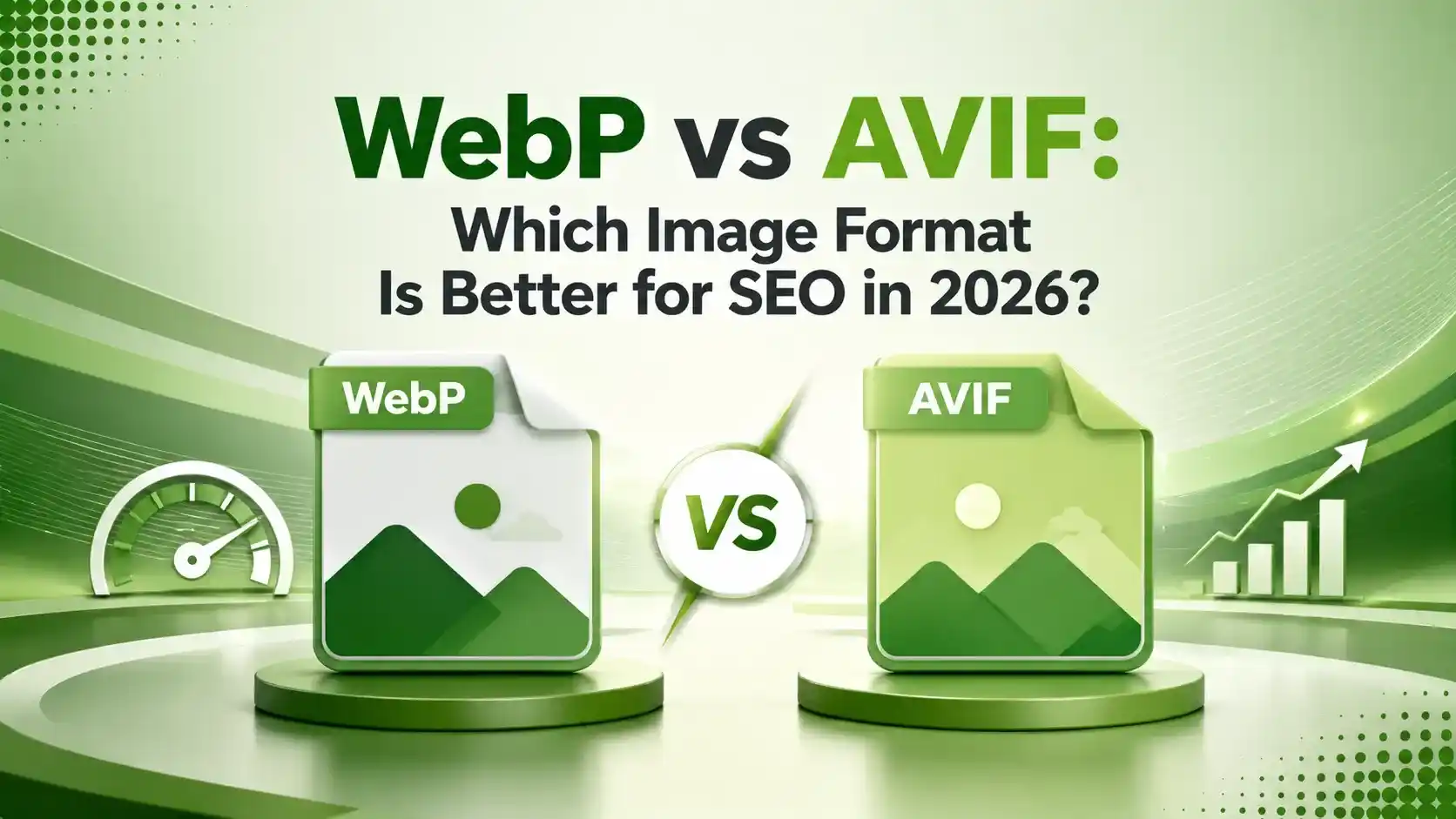
WebP vs AVIF isn't a clear winner AVIF compresses smaller, WebP has wider support. Here's how each affects Core Web Vitals and which to use where.
Table of Contents
ToggleWebP vs AVIF is the image format question every site owner runs into once JPEG stops being good enough. Both beat JPEG and PNG on compression, but they don't beat each other the same way, and picking wrong quietly costs you Largest Contentful Paint score, Core Web Vitals, and ultimately rankings.
The short version: AVIF compresses images up to 50% smaller than JPEG and roughly 20% to 30% smaller than WebP at equivalent visual quality. WebP compresses 25% to 35% smaller than JPEG and has near-universal browser support. Neither format wins outright, which is exactly why WebP vs AVIF keeps coming up as a real decision rather than a solved question.
Image weight is one of the biggest levers on Largest Contentful Paint, and LCP feeds directly into Core Web Vitals, which Google has confirmed influences page experience signals and, by extension, rankings. Format choice is genuine SEO work, not just a technical footnote.
This guide breaks down what separates WebP from AVIF, where each format wins, and the hybrid approach most performance-focused sites now use to get the best of both.
01WebP vs AVIF: The Core Technical Differences
ImageSEO.io's 2026 format comparison lays out the lineage clearly: WebP was released by Google in 2010 and is built on VP8 video compression. AVIF is based on the AV1 video codec, developed by the Alliance for Open Media, and arrived nearly a decade later with a fundamentally more efficient compression approach.
Both formats support lossy and lossless compression, transparency through an alpha channel, and animation. FileFormat's 2026 developer guide notes AVIF generally offers the stronger SEO advantage of the two due to smaller file sizes, though a hybrid fallback strategy is often the safer production choice. Elementor's 2026 breakdown notes AVIF adds high dynamic range and a wider color gamut on top of that, advantages that matter most for photography-heavy sites, though WebP still holds a clear edge in one area worth understanding before choosing.
02Compression and File Size: The Real Numbers
WebGaro's 2026 SEO showdown between the two formats reports AVIF compressing files up to 50% smaller than JPEG, and roughly 20% to 30% smaller than equivalent-quality WebP files, while retaining strong visual fidelity.
ImgCruncher's real-data comparison backs this up with a concrete example: a realistic before-and-after test on a 1200px hero image showed around a 77% reduction when converting to AVIF, translating directly into faster LCP and measurably better Core Web Vitals scores.
ImagePulser's comparison flags an important caveat: in many real-world tests, AVIF files end up 10% to 30% smaller than WebP for photographic content specifically. The gap narrows or shifts for simpler graphics, so the WebP vs AVIF advantage depends heavily on your actual image content.
03Browser Support and Compatibility in 2026
This is where the WebP vs AVIF gap still shows up in practice. ImageDocker's 2026 comparison confirms WebP is supported by nearly every browser in active use today, a full decade and a half of adoption behind it.
AVIF has closed most of that gap. FreeImages' 2026 format playbook notes both AVIF and WebP are now supported across all modern browsers, but Elementor's analysis, referenced above, cautions that AVIF decoding still isn't universal on older devices, which is exactly why a fallback strategy matters more for AVIF than for WebP.
04How Format Choice Affects Core Web Vitals and SEO
ImageSEO.io's guide, referenced above, makes the SEO connection explicit: image weight is one of the biggest levers on Largest Contentful Paint, and Core Web Vitals feed both Google rankings and the retrieval pipelines behind AI search. Choosing between WebP and AVIF is genuine image SEO work, not just engineering housekeeping.
ImgCruncher's analysis adds the practical mechanism: the LCP element on most pages is an image, and how fast that image downloads determines whether a page clears the 2.5-second LCP threshold Google treats as "good." A smaller file from either modern format directly improves that number over JPEG or PNG.
05WordPress and CMS Support for Both Formats
ImageDocker's guide notes WordPress has supported native AVIF handling since version 6.5, letting you upload AVIF files directly into the media library the same way you would a JPEG. WebGaro's showdown adds that automatic conversion of existing JPEGs into AVIF still typically requires a plugin like ShortPixel or Imagify, or an edge CDN like Cloudflare.
One implementation warning worth repeating: WebGaro's guide cautions against transcoding an already-lossy JPEG directly into AVIF, since compressing a lossy format a second time can introduce visible artifacts. Generate AVIF versions from original high-resolution source files whenever possible.
06When to Choose WebP vs AVIF
ImagePulser's comparison, referenced above, lands on a conclusion most current guides converge toward: there's no need to pick a single winner. WebP offers a simple, reliable way to modernize images today, while AVIF adds extra savings once you're ready to fine-tune performance further.
Choose WebP when broad compatibility and simple tooling matter more than squeezing out the last few percent of compression.
Choose AVIF for photography-heavy pages and hero images where LCP is the priority and the extra 20% to 30% saving matters.
Use AVIF for local SEO pages targeting mobile users on slower connections, where every kilobyte shaved off load time helps.
Combine both formats through content negotiation rather than picking one exclusively across your entire site.
07The Hybrid Approach: Serving Both Formats Automatically
The practical answer to WebP vs AVIF isn't choosing one, it's serving AVIF first, WebP as fallback, and JPEG as the final safety net. Modern browsers automatically pick the first format they support from a <picture> element.
<picture>
  <source srcset="/hero.avif" type="image/avif">
  <source srcset="/hero.webp" type="image/webp">
  <img src="/hero.jpg" alt="Descriptive alt text for the image"
       width="1200" height="630"
       loading="eager" fetchpriority="high">
</picture>

<!-- Server-side: set Vary: Accept so CDNs don't mix up cached formats -->
<!-- when serving different formats from the same URL -->
Vary: Accept
One common mistake worth avoiding: preload only the format the browser will actually use, typically the AVIF source on modern browsers. Preloading every variant wastes bandwidth on files the browser will never render.
08WebP vs AVIF at a Glance
ImageDocker's side-by-side comparison and WebGaro's showdown both converge on a similar practical breakdown across the factors that matter for a real implementation decision.
| Factor | WebP | AVIF |
|---|---|---|
| Compression vs JPEG | 25-35% smaller | Up to 50% smaller |
| Compression vs each other | Baseline | 20-30% smaller than WebP |
| Browser support | Near-universal, decade-mature | Wide support, some older-device gaps |
| Encoding speed | Fast | Slower, more compute-intensive |
| Best use case | Site-wide default, broad compatibility | Hero images, photography, LCP-critical assets |
| WordPress support | Native since 5.8 | Native since 6.5 |
09Priority Implementation Workflow
Five steps cover a practical WebP vs AVIF rollout. Tap each one for the specific action.
Audit Current Formats
Check what your site currently serves. Most sites still ship JPEG and PNG as the default, leaving easy compression gains on the table.
10Which Format Fits Your Site Score
Score your site to see whether WebP, AVIF, or a hybrid approach fits your situation best.
Which Format Fits Your Site Score
Select the option that best matches your current setup
11FAQs on WebP vs AVIF for SEO
AVIF generally offers the bigger SEO advantage due to smaller file sizes and faster LCP, but WebP's broader compatibility makes it the safer site-wide default.
No. A hybrid AVIF-first, WebP-fallback, JPEG-final-safety-net approach using the picture tag is the current best practice for most sites.
Yes to both, though animated AVIF (AVIFS) support varies more across implementations than WebP's more established animated format handling.
For LCP-critical hero images and photography, usually yes. For less performance-sensitive images, WebP's faster encoding may not be worth trading away.
Yes. WordPress has supported WebP natively since version 5.8 and added native AVIF upload support in version 6.5.
Related Articles
What We Learn Today
AVIF compresses up to 50% smaller than JPEG, 20-30% smaller than WebP
WebP offers near-universal browser support and simpler tooling
Image weight directly drives LCP, a core SEO ranking signal
The picture tag lets you serve AVIF, WebP, and JPEG automatically
WordPress supports WebP natively since 5.8, AVIF since 6.5
A hybrid approach beats picking one format exclusively
Build a Complete Technical SEO Foundation
Image format is one lever in a broader Core Web Vitals strategy. Explore our mobile testing and indexing diagnostic guides next.
Related Posts
Previous Post
Next Post
Previous Post
Next Post


- Artificial Intelligence
- Content
- Core Web Vitals
- Development
- Digital Marketing
- Display Advertising
- Google Ads
- Google Search Console
- GTM
- HTML
- HTML CSS
- JavaScript
- Keyword Research
- Link Building
- LinkedIn Ads
- Local SEO
- Meta Ads
- Mobile SEO
- Off-Page SEO
- On-Page SEO
- Paid Media
- Paid Media Analytics
- PHP
- PPC Strategy
- Python
- SEO
- SEO Basics
- SEO Tools
- Social
- Technical SEO